




Description
Technical Parameters
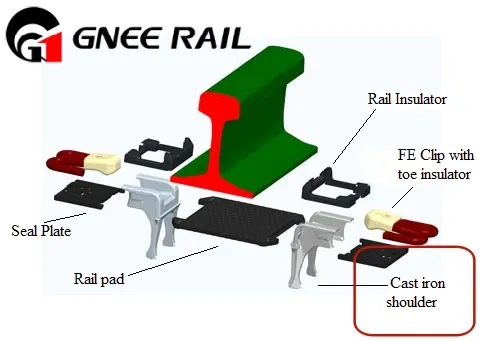
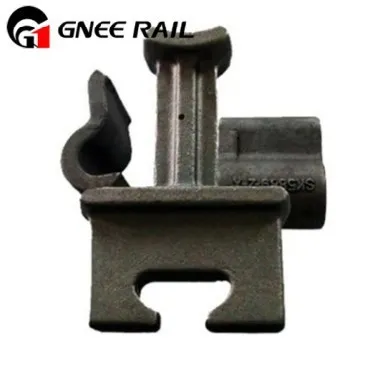
Rail Shoulder
| Category | Definition/Parameter | Technical Standards | Application Notes |
|---|---|---|---|
| Basic Definition | A rail shoulder is a structural component installed between the rail foot and sleeper to provide lateral support, prevent gauge widening, and distribute dynamic loads. | EN 13450, AREMA Ch.4, UIC 864 | Used in ballasted and slab tracks. |
| Primary Functions | - Lateral Rail Stability (resists horizontal forces) - Load Distribution (reduces sleeper stress) - Gauge Maintenance (keeps track within tolerance) |
UIC 865, EN 13230 | Critical for curves and high-speed sections. |
| Material Types | 1. Polymer (Elastic): - Polyurethane (70-90 Shore A) - EPDM (UV-resistant) 2. Rigid: - Ductile Iron (EN-GJS-500-7) - Composite (GFRP) |
ISO 4649 (Polymer) ASTM A536 (Iron) |
Polymer = vibration damping; Iron = heavy haul. |
| Key Dimensions | - Width: 50-80mm - Height: 20-30mm - Length: Matches sleeper shoulder |
EN 13230-3 | Must fit rail profile (e.g., UIC 60). |

Types Comparison
| Type | Advantages | Limitations | Best For |
|---|---|---|---|
| Elastic Pad | Reduces vibration, easy install | Lower load capacity | Passenger lines (≤200 km/h) |
| Cast Iron Block | High strength, long lifespan | Requires precise alignment | Heavy haul (30t+ axles) |
| Composite | Corrosion-resistant, lightweight | Higher cost | Coastal/industrial zones |
gnee-professional supplier


Hot Tags: railway shoulders, China railway shoulders manufacturers, suppliers, factory, types of rail anchors, railroad dog spike, square head screw spike, Rail Insulator, kpo rail clamp, fish bolt


