


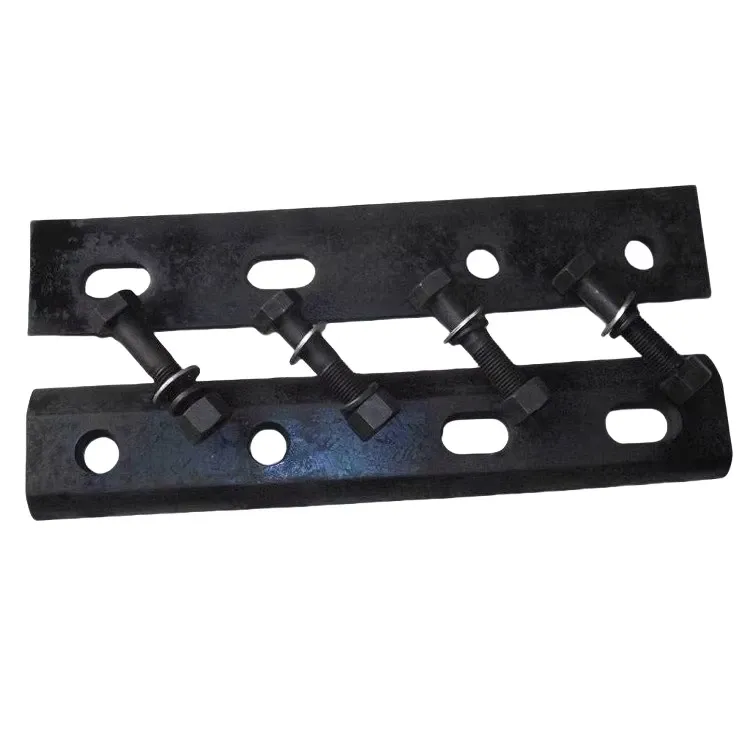
Description
Technical Parameters
Fish Plate Models & Specifications
Fish plate models are classified by the rail type and weight they are designed to connect. Their "model" is derived from the rail section they match.
| Model (Based on Rail Section) | Compatible Rail Size (kg/m) | Typical Length (mm) | Material & Finish | Number of Holes | Joint Type |
|---|---|---|---|---|---|
| 40kg/m Rail Fish Plate | 40 | 600 | Q235B Steel, Hot-Dip Galvanized | 4 or 6 | Standard |
| 50kg/m Rail Fish Plate | 50 | 600 | Q235B Steel, Hot-Dip Galvanized | 6 | Standard |
| 60kg/m Rail Fish Plate | 60 | 800 | Q235B / Q345B Steel, Galvanized | 6 | Standard |
| 75kg/m Rail Fish Plate | 75 | 1000 | Q345B Steel, Galvanized | 6 | Heavy Duty |
| CR73 Crane Rail Fish Plate | QU70 / AU70 | Custom | Alloy Steel, Galvanized | 4 | Crane Rail |
| Insulated Fish Plate | 50 / 60 / 75 | 600 / 800 | Steel core with Nylon or Composite insulation | 6 | Insulated |

Application and Comparison
| Feature | Fish Plate (Joint Bar) | Welded Rail (CWR) |
|---|---|---|
| Primary Function | To splice and connect the ends of two adjacent rail sections. | To eliminate joints by creating a single, continuous rail segment. |
| Component Type | Joining component. | Fabrication/Construction method. |
| Ride Quality | Poor. Creates impact, noise, and vibration ("click-clack" sound). | Excellent. Smooth and quiet ride. |
| Structural Integrity | Creates a weak point in the track. | Creates the strongest, most continuous structure. |
| Maintenance Requirement | High. Bolts can loosen; joint and sleepers degrade faster. | Very Low. Minimal maintenance due to lack of joints. |
| Typical Application | Older networks, sidings, insulated joints (for signaling), expansion joints. | Modern mainlines, high-speed rail, and heavy-haul corridors. |
| Key Advantage | Allows for thermal expansion/contraction. Essential for repairs and insulated joints. | Provides superior strength, longevity, and ride quality. |
| Key Disadvantage | High maintenance and reduces overall track strength. | Requires management of thermal stresses (risk of buckling). |

gnee-professional supplier


Hot Tags: rail fish plate for rail fastening, China rail fish plate for rail fastening manufacturers, suppliers, factory, insulated block joint, rail bolt, fish bolt types, normal fish plate, glued insulated rail joint, asce rail specification


