


What is the height of the DIN Rail S20 Light rail?
The structural cross-section of the DIN 5901 S20 light steel rail is engineered with precise dimensional ratios to handle the high vertical axle loads common in mining transport and heavy factory material handling.
The standard profile measurements for this light steel rail section are defined by these exact dimensional metrics:

- Total Profile Height: The exact vertical height of the DIN S20 light rail is 92.00 mm, measured from the bottom base surface to the top of the running head.
- Running Head Width: The horizontal width of the upper wheel-contact head is 44.00 mm, offering an optimized surface area for narrow-gauge machinery wheels.
- Flange Base Width: The horizontal width of the bottom support foot is 82.00 mm, distributing active load stresses evenly across tracking sleepers.
- Center Web Thickness: The vertical connecting web features a nominal thickness of 10.00 mm, providing high resistance against lateral bending and shear forces
| Product Name | DIN Standard Rail | ||||||
| Standard | DIN5901:1955-11 | ||||||
| Model | DIMENSION | Weight | Material | Length | |||
| A(mm) | B(mm) | C(mm) | t(mm) | (KG/M) | (m/PC) | ||
| S14 | 38 | 90 | 70 | 9 | 14 | 55Q | 6-12 |
| S18 | 43 | 93 | 82 | 10 | 18.3 | 55Q | 6-12 |
| S20 | 44 | 100 | 82 | 10 | 19.8 | RO700 | 6-12 |
| S30 | 60.3 | 108 | 108 | 12.3 | 30.03 | RO700 | 6-12 |
How Do Profile Height and Flange Width Ratios Protect the S20 Rail Against Lateral Buckling?
The structural stability of a light rail profile depends heavily on the geometric ratio between its vertical height and its lateral base width. For the DIN 5901 S20 profile, the ratio of the 92.00 mm height to the 82.00 mm flange base provides an excellent center of gravity, helping the track resist severe lateral forces from passing wheel flanges. If a rail profile is rolled with an incorrect height-to-base ratio, it loses structural stiffness, making it prone to twisting under heavy, unbalanced loads.
The geometric relationship between the 92.00 mm height and the other cross-sectional components provides key engineering advantages:
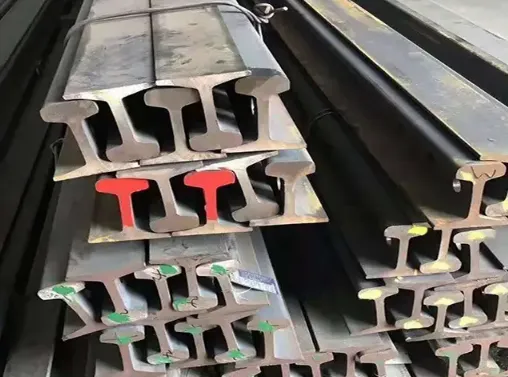
- High Section Modulus: The vertical height provides a high section modulus along the primary loading axis, minimizing downward flexing between supporting sleeper ties.
- Stable Base Anchoring: The wide 82.00 mm flange prevents the rail from tilting outward during heavy curved tracking movements, reducing stress on the fast clips.
- Balanced Web Support: The 10.00 mm center web is centered perfectly under the load path, transferring vertical forces directly to the ballast foundation without twisting.
Balancing these dimensional ratios allows the S20 profile to handle heavy axle loads despite its light linear weight of 19.80 kg/m. GNEE RAILWAY RAILWAYL tests our finished profiles under rigorous mechanical structural simulations to verify that all geometric ratios meet international safety standards. Reach out to our technical desk today to secure official material compliance certificates for your engineering records.
What is the maximum allowable axle load for S20 steel rails?
The maximum allowable axle load for S20 steel rails is typically 3.5 to 5.0 metric tons per axle for standard industrial and light-rail applications. In heavy-haul applications, specific rail configurations can sometimes accommodate higher limits, but 5.0 metric tons is widely considered the safe operational threshold.
Because the S20 is a European standard (DIN 5901) light rail weighing 19.8 kg per meter, its structural limits depend on several factors:

- **Sleeper Spacing**: Spacing sleepers or support brackets closely (every 500–600 mm) helps achieve the maximum 5.0-ton limit, whereas wider spacing significantly reduces capacity.
- **Operational Velocity**: Slower moving transport (under 25 km/h) can handle the upper end of the load, while higher velocities require a reduction in allowable weight.
- **Material Grade**: S20 rails are manufactured in different steel grades. Using higher-strength grades like 55Q (tensile strength ≥ 685 MPa) or RO 700 provides better resistance to wear and deformation compared to Q235B.
FAQ
- What is the maximum allowed manufacturing deviation for the 92.00 mm height of an S20 rail?
According to DIN 5901 structural standards, the standard manufacturing tolerance for the vertical height of an S20 light rail is ± 0.75 mm. Keeping variations within this tight range ensures smooth, uniform joint transfers and prevents vehicle wheel vibration during operation.
- How does the 92.00 mm height of the S20 rail compare to the standard Chinese 22 kg/m light rail?
The standard Chinese 22 kg/m light rail features a total vertical height of 93.66 mm, making it slightly taller than the 92.00 mm DIN S20 profile. Because of this height difference and variations in head width, these two profiles cannot be connected directly without using specialized step-compromise joint bars.
- Can the height of the S20 profile handle heavy overhead crane hoist applications?
The 92.00 mm height and 19.80 kg/m linear mass are ideal for light to medium industrial overhead crane runs, automated warehousing hoists, and material monorails. For massive, high-capacity steel mill cranes, engineering teams usually upgrade to thicker A-series crane rails, such as the A65 or A75 profiles.
- Why is the center web thickness of 10.00 mm optimized for the 92.00 mm height?
This specific ratio provides excellent structural stiffness, allowing the vertical web to support the 92.00 mm height without buckling under load. The 10.00 mm thickness also leaves plenty of structural steel around pre-drilled fishplate holes, preventing cracks from forming under heavy shear forces.
Get a Quote in 24 Hours
GNEE RAILWAY maintain immediate logistics reserves of hot-rolled 19.80 kg/m segments available in standard 6-meter and 10-meter formats, entirely supported by customizable web punching and precision vertical abrasive sawing lines. Our export division manages comprehensive international freight scheduling and supplies traceable metallurgical testing logs conforming to European quality directives. Connect with our engineering sales group today to secure competitive volume price schedules or to request certified mechanical material datasheets.


