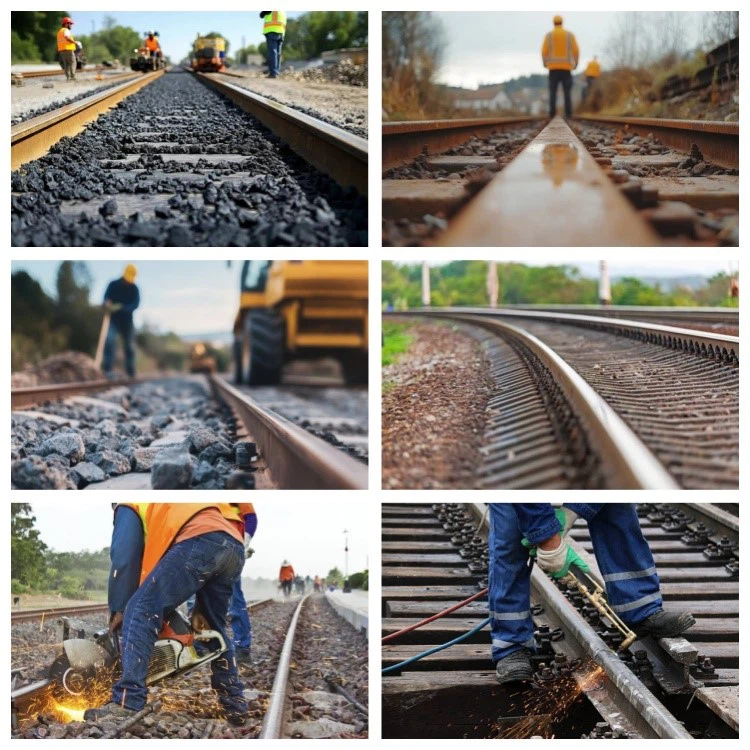
Guide for the selection of railway spikes
I. Technical specifications of size parameters
The length range of standard spikes is 150-200 mm, and the diameter range is controlled at 18-22 mm. For heavy-load lines with axle weights of more than 30 tons, an extended design is required, with a length of up to 220 mm and a diameter of 25 mm to meet the pull-out resistance requirements.
II. Functional classification and application scenarios
1. Standard straight rod type: suitable for ordinary passenger and freight mixed running lines
2. Spiral anti-loosening type: used for small radius curve sections
3. Elastic shock-absorbing type: specially developed for high-speed railway ballastless tracks
4. Composite insulation type: special anti-electro-corrosion model for electrified sections

III. Material process quality requirements
Q450NQR1 weathering steel is used for die forging, and the surface needs to be hot-dip galvanized, with a zinc layer thickness of not less than 85μm. The head should adopt a cross groove design to ensure that the torsional strength reaches more than 120N·m.
IV. Selection decision factors
1. Matching of sleeper materials: Concrete sleepers must be used with nylon sleeves
2. Environmental corrosion level: Coastal areas should use thickened coating models
3. Maintenance convenience: Reusable self-locking structures are preferred