

Types of Damage to Concrete Railway Sleepers
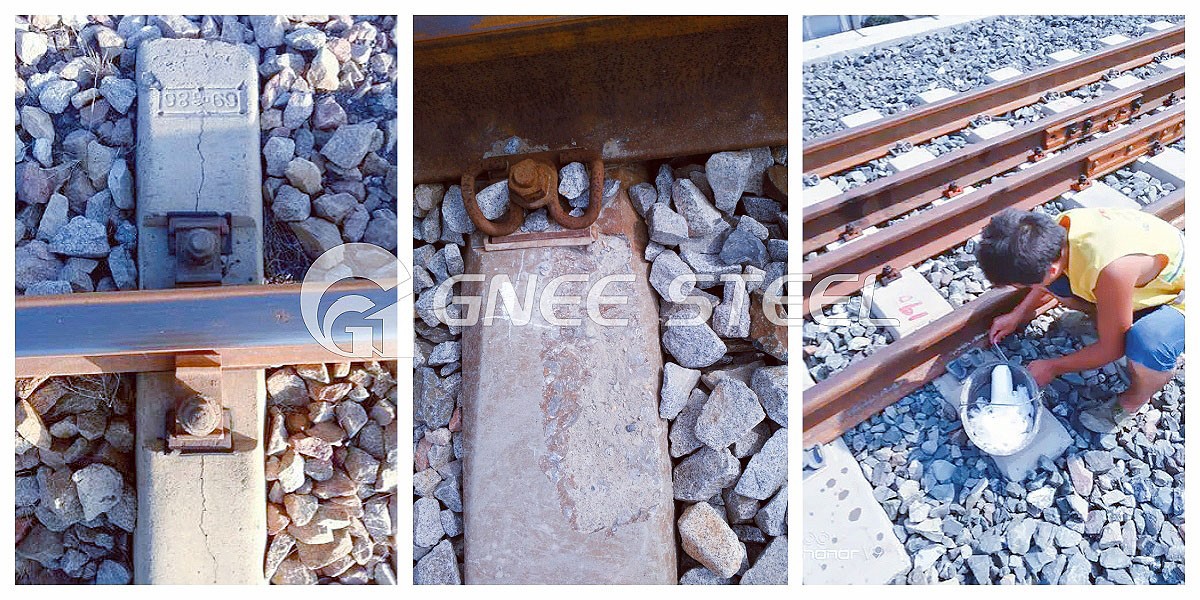
There are several types of damage that can occur to concrete railway sleepers, and these issues can significantly affect the safety and performance of railway operations. As a result, regular inspections and maintenance are crucial to ensure the longevity and functionality of the sleepers. Below is a detailed summary of 10 common types of damage to concrete railway sleepers. Let's take a look.
1. Excessive Transverse Cracking in Trackbed Section
Concrete sleepers can develop large transverse cracks in the trackbed area due to excessive bending moments, leading to failure if the cracks exceed the sleeper's crack resistance.
2. Compression Failure in Trackbed Section
Compression failure occurs when the rubber pads are damaged, allowing the rail to directly contact the track groove, causing the concrete in the trackbed to crush.
3. Large Transverse Cracks in the Middle Section
Cracks in the middle of the sleeper can occur from both negative and positive bending moments. These cracks are more likely to lead to failure than those in the trackbed section, especially in the lower middle part of the sleeper.
4. Compression Failure in the Middle Section
Excessive positive bending moments in the middle section can cause large cracks and compressive failure in the concrete, often occurring at rail joints.
5. Longitudinal Cracking
Longitudinal cracks can appear along the length of the sleeper, often around the bolt holes or reinforcing steel. These cracks, especially in older sleepers (1968-1973), significantly reduce their lifespan.
6. Surface Cracking (Map Cracking)
Fine, surface cracks in a pattern (similar to a map) can form, typically at the ends and sides of the sleeper, affecting its durability.
7. Diagonal Cracks and Twisting
Improper tamping during track maintenance can cause diagonal cracks or twisting in the middle part of the sleeper, especially when trains pass.
8. Shoulder Damage
The shoulder of the sleeper can wear out from horizontal forces, especially on curves with small radii. This issue is common and hard to resolve, even with widened base plates.
9. Corrosion
Exposure to water or harmful substances from trains can cause corrosion, damaging the concrete and reinforcing steel, shortening the sleeper's lifespan.
10. Chipping of the Bottom Edge
Manual tamping or impact on the sleeper's bottom edge can cause chunks of concrete to break off, weakening the sleeper and increasing the risk of other damage. This is especially common at rail joints.


