


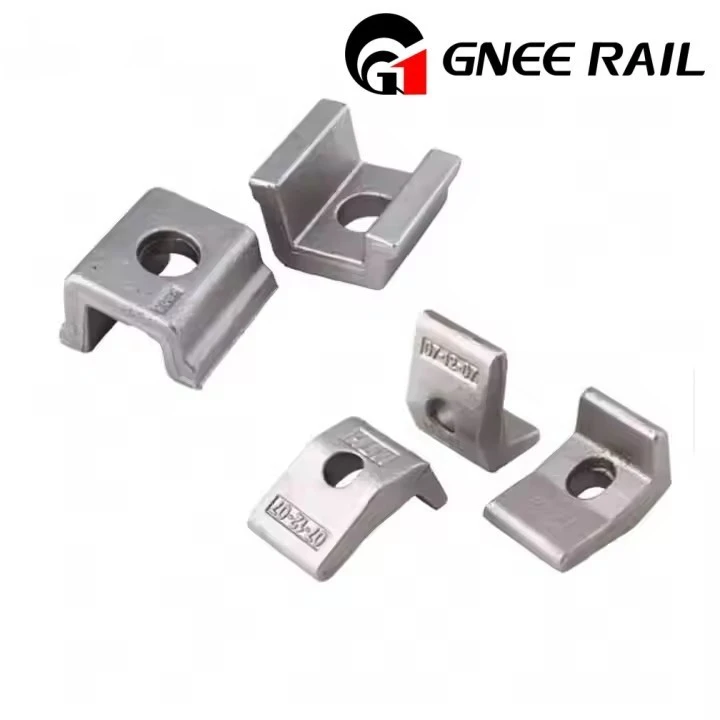


↵Rail Clamp Fastening System

A Railway Clamp is a rigid or semi-rigid fastening device designed to physically grip the foot of the rail, typically combining multiple components like a shoulder, bolt, and plate to create a locked mechanical connection to the sleeper or base.
Unlike elastic clips that rely on spring force, clamps often function through direct mechanical interference or bolt tension, creating a more positive but less forgiving restraint against rail movement.
They are commonly installed using standard tools like wrenches and torque drivers, with adjustments made by tightening bolts to a specified pre-load.
Technical Specifications:
| Clamp Type / Model | Primary Application | Typical Clamping Mechanism | Key Material | Distinguishing Feature |
|---|---|---|---|---|
| Fist® Grip Rail Clamp | Industrial crane tracks | Twin bolts pressing a jaw onto rail foot | Forged Steel | Allows rail height adjustment |
| KLAW® Universal Clamp | Guard rails & general track | Single bolt actuating a pivoting claw | Cast Steel | One-bolt fast installation |
| Bemo® Elastic Shoulder Clamp | Slab track & embedded rail | Bolted shoulder with integrated elastic pad | Ductile Cast Iron | Combines rigid shoulder with elastic element |
| Slide Expansion Clamp | Bridge expansion joints | Allows longitudinal slide within defined range | High-Strength Steel | Accommodates thermal expansion without losing grip |
| Anti-Creep/Anchor Clamp | Grades & braking zones | Wedge or bolt system locking rail to sleeper | Alloy Steel | Specifically designed to resist longitudinal rail movement |

Functional & Engineering Perspective
Crane and industrial tracks within ports, steel mills, and shipyards where extreme point loads from heavy machinery demand absolute rigidity and prevention of rail roll-over.
Guarded rails (check rails) on sharp curves and turnouts, where clamps provide the positive lateral restraint needed to guide wheel flanges and prevent derailment.
Rail joints and insulated block joints, where joint bars (fishplates) are often secured to the sleeper using specialized clamps to maintain alignment and electrical insulation.
Maintenance & Operational Perspective
- Initial bolt tension verification is critical and performed within 24-48 hours of installation due to rapid settling and bedding-in of components.
- Frequent bolt re-torquing cycles are often required, especially in high-vibration environments like industrial yards, typically every 3-12 months depending on traffic.
- Visual inspections for wear and fatigue cracks in the clamp body or bolts are conducted annually, focusing on stress concentration points.

Gnee Professional supplier


Hot Tags: nail railway track clamp, China nail railway track clamp manufacturers, suppliers, factory, ypes of rail shoulder, rail anchors specifications, rail plastic sleeve, screw spikes in railway, screw spikes types, anchor bolt specification


