




↵
Rail Fishplate Fastening System

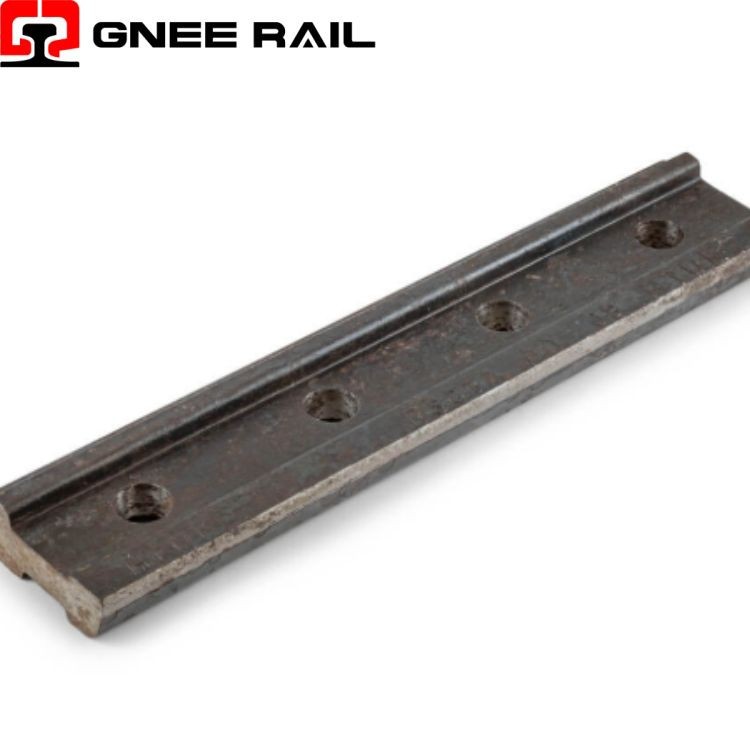
A Railway Fishplate is a precision-forged steel connecting component that bridges the gap between adjacent rail ends, functioning as a temporary or permanent structural splice. Unlike continuous welded rail, fishplated joints create a hinged connection that permits controlled vertical deflection while maintaining horizontal alignment. The plate's hourglass-shaped cross-section is engineered to match the rail profile's neutral axis, ensuring that bending stresses transfer efficiently across the joint. Manufactured via hot rolling or drop forging from manganese or carbon steels, these plates accommodate thermal expansion while supporting wheel loads ranging from light rail to heavy-haul main lines .
Technical Specifications:
| Feature Category | Key Benefit | Common Application |
|---|---|---|
| Manganese Steel | Work-hardens under impact for extended life | Heavy-haul & impact zones |
| Grain Flow Orientation | Matched to bending stress direction | High-speed main lines |
| Bolt Hole Clearance | Accommodates 10-15mm thermal movement | Temperature-variable climates |
| 45° Crack Detection | Early failure identification point | Routine track inspection |
| Drop-Forged Grain | Superior fatigue resistance vs. rolled | Turnouts & crossing diamonds |
| Expansion Joint Design | Manages extreme thermal movement | Long welded rail segments |

Installation & Maintenance Perspective:
- Hot-rolled plates exhibit continuous grain flow following the bar profile for enhanced fatigue resistance .
- Drop-forged versions feature superior grain orientation perpendicular to bending stresses .
- Manganese steel grades (12-14% Mn) provide work-hardening properties under impact loading .
- Normalizing heat treatment refines grain structure after forming, eliminating residual stresses .
- Surface decarburization controlled to less than 0.5mm to maintain surface hardness and wear resistance .
Maintenance & Operational Perspective
- Fishplates must accommodate rail expansion of 0.0115mm per meter per degree Celsius .
- Bolt hole clearances calculated to allow 10-15mm of longitudinal movement at extreme temperatures .
- Seasonal gap monitoring required to prevent "knuckle rail" deformation in summer heat .
- Winter contraction can open gaps beyond plate capacity, causing high-impact wheel loads .
- Expansion joints with sliding fishplates used where thermal movement exceeds standard capacity .

Gnee Professional supplier


Hot Tags: railroad fishplates, China railroad fishplates manufacturers, suppliers, factory, asce 85 rail dimensions, railroad joint bars, asce rail specification, types of fish plate in railway, American standard rail, joggled fish plate


