


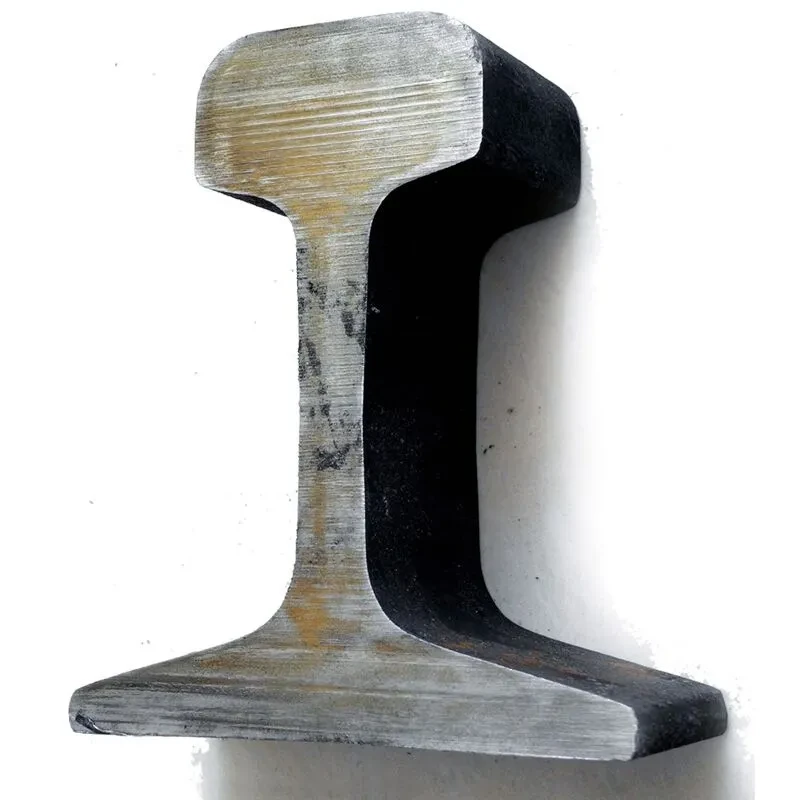
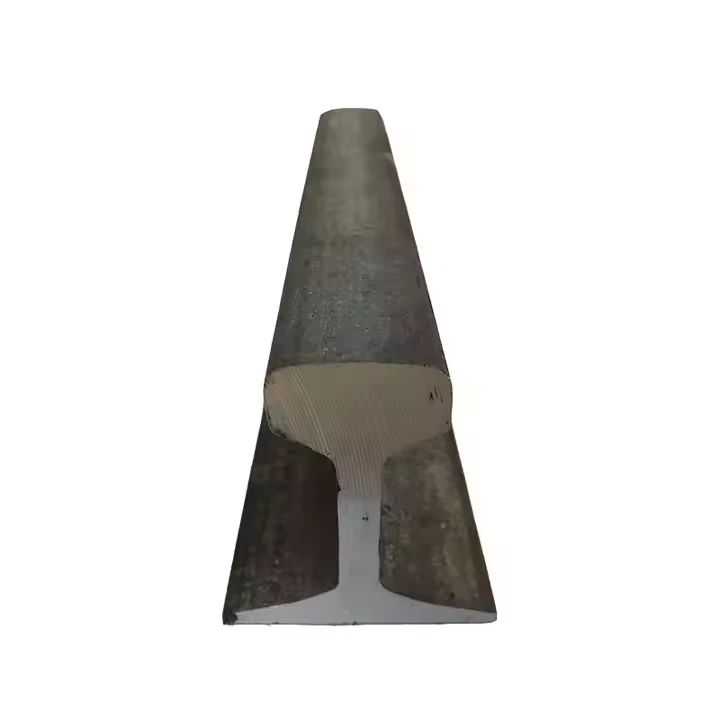
Products Description
22kg rails are more convenient to transport, store and lay due to their relatively light weight, reducing the reliance on heavy equipment.
Made of high-quality steel, 22kg rails have good strength and wear resistance, and can cope with mild traffic pressure while maintaining a long service life.
This type of rail has a relatively low cost and is particularly suitable for projects with limited budgets or special occasions where rails need to be replaced frequently. It is suitable for railway environments such as urban rail transit, mining tracks, and light rail systems that do not require excessive loads. Anti-corrosion treatment is used to ensure that the rails can be used for a long time in humid and harsh climate environments.
| Parameters Of 22kg Light Rail | |||
| type | weight (kg/m) | material | length (m) |
| 22Kg | 22.30 | 55Q | 6-10m |
| rail height (mm) | bottom width (mm) | head width (mm) | web thinkness (mm) |
| 93.66 | 93.66 | 50.8 | 10.72 |


About Us
GNEE (Tianjin) Multinational Trade Co., Ltd.
Since its establishment in 2008, we have always adhered to the original intention of quality, driven by the satisfaction of 8000+ customers, and continuously expanded our business to 160+ countries. Today, 200+ elite employees are welcoming new challenges and opportunities in the rail foreign trade industry with full enthusiasm.

FAQ
1.What are the common materials for rails?
Common rail materials include ordinary carbon steel, medium manganese steel, high carbon steel and alloy steel. Ordinary carbon steel has a low cost and is often used in general railway lines; medium manganese steel has good wear resistance and impact resistance; high carbon steel has high hardness and is suitable for heavy-duty railways; alloy steel has excellent comprehensive performance and can meet the needs of special working conditions, such as high-speed passenger dedicated lines.
2.How to choose the right rail specifications?
The selection of rail specifications requires consideration of factors such as the purpose of the railway, the axle weight of the running vehicle, the driving speed, and the geological conditions of the line. For example, heavy-duty freight railways usually require heavier and larger rails, such as 60kg/m and above, to withstand greater pressure and wear; while urban light rails or lines with lower speeds and smaller transport volumes can use relatively lighter rails, such as 38kg/m, 43kg/m and other specifications.
3.What impact does the weight of the rail have on railway operation?
Heavier rails provide greater stability and load-bearing capacity, can withstand greater axle loads and impact forces during train operation, reduce rail deformation and wear, and are suitable for heavy-load, high-speed railway operations. However, excessive weight may increase construction costs and construction difficulties. Lighter rails are less expensive and relatively easy to install, but have limited load-bearing capacity and are suitable for lines with smaller volumes and lower speeds.
4.What is the general service life of rails?
The service life of rails is affected by many factors, such as material, use environment, maintenance, and train operating conditions. Under normal maintenance and general operating conditions, the service life of ordinary carbon steel rails may be around 20-30 years; while alloy steel or specially treated rails, if properly maintained, can have a service life of 30-50 years or even longer. Under heavy loads, high-frequency operations, and harsh environments, the service life of rails will be shortened accordingly.

Hot Tags: china 22kg light steel rail railway 55q, China china 22kg light steel rail railway 55q manufacturers, suppliers, factory, rails for retail stores, rails for skiing lifts, rails for powder coating, rails for assembly lines, rails for safety regulations, crane rail material


