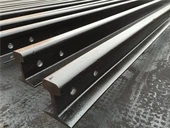
Railway Steel Rail Specification Table
| Feature / Aspect | Description & Function |
|---|---|
| Primary Function | To provide a continuous, level, and sturdy surface for train wheels to roll upon. It guides the wheels, supports the immense weight of the train, and transmits the load to the sleepers and ballast. |
| Profile Sections | 1. Head: Wider top section that makes contact with the wheel flange. 2. Web: Vertical section that provides height and stiffness. 3. Foot: Base that provides a stable platform for fastening to sleepers. |
| Material | Carbon Manganese Steel. Typically 1080 or 1100 grade steel. High carbon content for hardness and wear resistance. Manganese for strength and toughness. |
| Manufacturing Process | 1. Hot Rolling: The standard process for most rails. 2. Heat Treatment: After rolling, rails can be heat-treated (quenched and tempered) to enhance hardness and strength. |

Key Concepts:
Axle Load: The total weight supported by one axle. Higher axle loads require heavier, stronger rails.
Wear: Occurs primarily on the head, especially on curves. Head-Hardened (HH) rails are used in high-wear areas.
Corrosion: Rails in coastal or humid environments may require Corrosion-Resistant Steel (often with Copper alloying).
Internal Defects: Modern rails are meticulously inspected using Ulasonic Testing (UT) to find internal flaws before installation.
End Hardening: The ends of rails can be specially hardened to resist battering at joints, even in otherwise non-hardened rails.
GNEE RAILWAY-professional supplier


Hot Tags: train steel rail, China train steel rail manufacturers, suppliers, factory, rails for thermoforming operations, rails for molds, rails for security systems, uic 60 kg rail meaning, din536 rail dimension, rails for additive manufacturing