


How to prevent creep deflection of the S20 rail profile during long-term service?
Preventing the long-term creep deflection of the standard DIN 5901 S20 rail profile under continuous cyclic loading requires a dual strategy combining precise metallurgical boundary controls during manufacturing with the implementation of robust physical anchoring systems during track layout. Because light rails face continuous longitudinal thermal stresses and heavy vertical wheel vectors, the track structure must be mechanically constrained to prevent material migration and structural sagging.
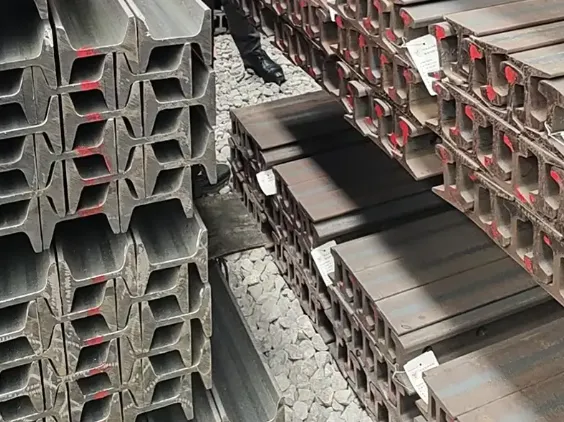
- Mechanical Anchoring: Utilizing high-tension elastic fastening clips paired with heavy-duty anti-creep rail anchors creates sufficient frictional resistance to counteract longitudinal braking forces and thermal expansion.
- Metallurgical Stability: Specifying high-manganese killed carbon steel variants ensures an inherently stable pearlitic microstructural grain framework that naturally resists plastic flow and time-dependent deformation.
- Structural Support Distribution: Implementing tight, calculated sleeper spacing metrics across the transit grid effectively minimizes localized structural deflection by distributing dynamic wheel forces evenly across the ballast foundation.
What Dimensional Attributes Control the Creep Deflection Resistance of the S20 Rail?
The Profile S20 rail is structurally dimensioned to yield an optimized vertical moment of inertia within a compact space-saving layout, which naturally assists in limiting structural bowing across spanning supports.
The engineering drawing of S20 steel rail lots dictates a definitive 92.00 mm total profile height, an 82.00 mm wide base flange footprint, and a 44.00 mm wide running head crown. The central 10.00 mm web thickness operates as a rigid vertical beam column, directly resisting the localized shear stresses that can induce microstructural material creeping over years of continuous active service.
S20 Rail Specifications
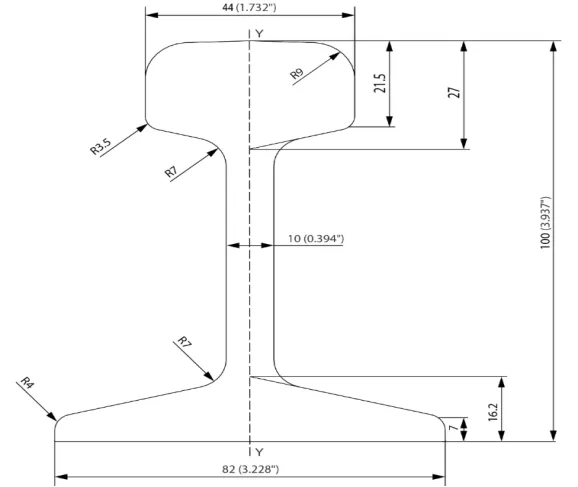
| Type of light rail | Standard | Dimensions mm | Section S | Mass m | |||
| H | F | K | S | cm² | kg/m | ||
| European standard EN 13674-1 | |||||||
| S20 | DIN 5901 | 100 | 82 | 44 | 10 | 25,22 | 19,80 |
What is the Role of rail fish plate in Preventing the Creep Deflection of S20 Rails?
Rail fish plates connect adjacent S20 rail segments, preventing them from shifting independently. They counteract rail creep by providing longitudinal clamping friction and structural stiffness, resisting the driving forces of passing trains while maintaining the uniform alignment needed to stop vertical deflection.
How Fish Plates Prevent Deflection and Creep on S20 Rails
Fish plates (or joint bars) are designed specifically to resolve the weaknesses at rail joints. Here is how they protect lighter DIN 5901 S20 tracks (a 19.8 kg/m profile) from deformation:
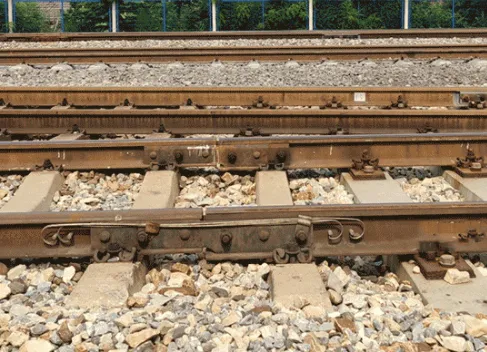
- Restricting Longitudinal Movement: S20 rails are highly susceptible to "creep" (the longitudinal slippage of the rail) caused by wheel rolling resistance, braking, and temperature fluctuations. The fish plate clamps tightly onto the rail web, generating heavy friction through bolted connections that lock the rail ends and prevent them from sliding forward.
- Minimizing Vertical Deflection: As a train wheel crosses the gap between two unjoined rails, it causes severe downward impact that drives the ends forward (inducing creep). Fish plates provide vertical stiffness across the joint, acting as a bridge that transfers the wheel load from the trailing rail to the leading rail evenly.
- Maintaining Track Geometry: By preventing both lateral and vertical misalignment at the joint, fish plates ensure wheels roll smoothly across the transition. This eliminates the excess dynamic impact forces that typically aggravate rail creep.
- Permitting Thermal Expansion: While fish plates immobilize the rail against creep, they still utilize bolt-hole clearances to allow the S20 rails to safely expand and contract with temperature shifts. This prevents stress accumulation that could otherwise cause the rail to fracture or buckle.
FAQ
- What specific fastener type provides the highest longitudinal resistance for the 82.00 mm S20 rail base?
The 82.00 mm base flange of the DIN 5901 Steel Rail is best secured using high-tension elastic clips such as the E-series combined with ribbed tie plates and matching anti-creep rail anchors. This combination applies a continuous vertical clamping force that increases the frictional coefficient between the steel base and the tie, successfully preventing longitudinal tracking creep caused by vehicle braking.
- How does continuous underground humidity affect the long-term deflection rate of the S20 Mining Rail Profile?
Continuous high humidity inside underground mining shafts can accelerate localized surface oxidation, which gradually thins out the structural 10.00 mm web if left unprotected. Utilizing our high-manganese European standard EN 13674-1 steel formulations naturally slows down rust pitting, ensuring the rail preserves its full vertical cross-section and layout stiffness over an extended service lifecycle.
- What sleeper spacing interval is recommended to prevent vertical sagging of the S20 profile?
For standard industrial material transport operations carrying axle loads up to 5.0 metric tons, a maximum sleeper spacing interval of 600 mm to 750 mm is highly recommended. Keeping this close support frequency significantly shortens the unsupported span length of the European S20 Light Rail, reducing vertical bending moments and eliminating long-term creep sagging.
Get a Quote in 24 Hours
Our enterprise manufactures a deep inventory of global track shapes managed by targeted technical representatives who steer your complete supply timeline with comprehensive after-sales verification, so interact with our commercial pricing desk right now to receive immediate bulk valuations or review custom layout drawings.


