


S20 Light Rail vs S18 Rail
The structural choice between S20 Light Rail and S18 Rail represents a critical decision point for track engineers and procurement managers designing narrow-gauge networks, mining tunnels, and factory transport corridors. Both profiles originate from the European national profiling framework (specifically under the DIN 5901 standard), sharing a flat-bottom tee design optimized for light axle loads.
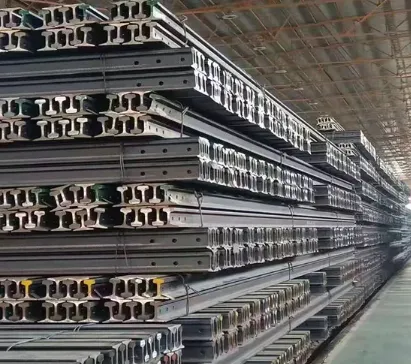
However, the S20 light rail systems feature a nominal linear mass of 19.80 kg/m and a height of 100.00 mm, whereas the S18 rail possesses a lighter linear mass of 18.30 kg/m and a reduced structural height of 93.00 mm. Choosing between these profiles requires a thorough analysis of wheel load distribution, track curvature tolerances, and total system stiffness.
The primary engineering differences that separate these two light steel rail variants can be summarized through four key mechanical metrics:
- Sectional Modulus and Bending Rigidity: The 100.00 mm vertical height of the S20 Rail Profile provides significantly greater resistance to vertical deflection compared to the 93.00 mm height of the S18 rail, allowing for wider sleeper spacing under identical loads.
- Axle Load Thresholds: The S20 profile is engineered to support active wheel loads up to 3.5 metric tons, while the S18 rail is strictly limited to lighter material carts, typically capped under 2.5 metric tons.
- Running Head Surface Area: The broader head dimension of the S20 light rails optimizes the wheel-rail contact zone, reducing localized contact pressures and minimizing plastic head deformation under continuous cycles.
- Fastening and Accessory Footprints: The S20 utilizes an 82.00 mm base width, which requires larger joint bars and clip assemblies than the 80.00 mm base footprint of the standard S18 profile.
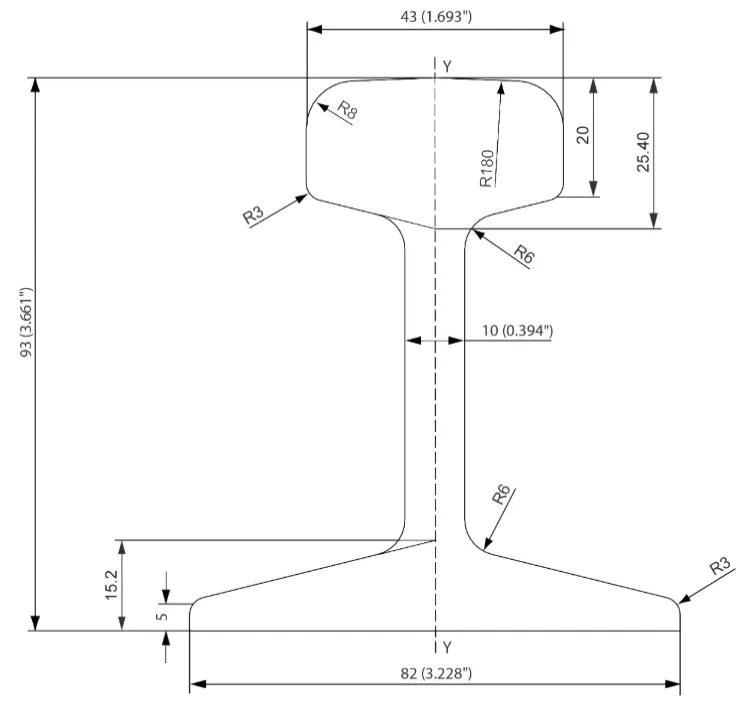
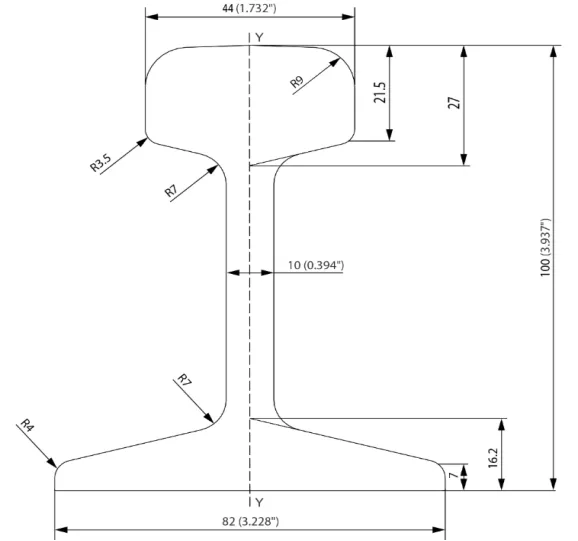
GNEE RAILWAY RAILWAYL maintains modern, high-precision rolling facilities calibrated to manufacture both the S20 and S18 light tracking profiles with exceptional straightness and tight dimensional tolerances. Our metallurgical processing incorporates automated continuous-casting blocks and multi-pass forming lines to ensure completely uniform pearlite grain structures from head to foot.
What Are the Specific Application Environments for S20 Mining Rail vs. S18 Rail Layouts?
While both profiles are grouped within the European S20 Light Rail and light-duty classifications, their specific weight differences make them suitable for distinct industrial application environments. The S18 rail is traditionally specified for ultra-lightweight, temporary tracking installations where rapid manual assembly and disassembly are required. In contrast, the S20 Mining Rail is preferred for permanent or semi-permanent transport corridors that handle consistent material payloads.
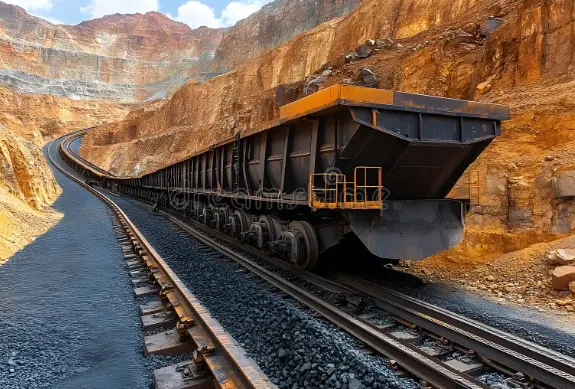
- S18 Rail Installations: Temporary agricultural harvest tracks, light brickyard drying tunnels, lightweight manufacturing assembly loops, and low-capacity manual push-car tracks.
- S20 Rail Installations: Main underground hauling passages for S20 Mining Rail Profile cars, heavy-duty automated warehousing stacker systems, workshop hoists, and small crane runways.
- Environmental Durability: In wet or corrosive mining shafts, the extra mass of the S20 steel rails provides a larger wear buffer against rust scaling compared to the thinner S18 profile.
Selecting the wrong track weight can cause premature track failure if an S18 rail is overloaded, or result in unnecessary material costs if an S20 profile is over-engineered for a basic manual push-car layout. GNEE RAILWAY RAILWAYL's project advisory group has over a decade of experience matching tracking profiles to international project parameters. Let our specialists evaluate your operational environment by opening a technical inquiry today.
FAQ
- Can an S20 steel rail connect directly to an S18 rail segment on a continuous track?
No, you cannot connect an S20 rail directly to an S18 rail using standard fishplates because their heights and head widths differ. To join them safely without creating a dangerous step on the running surface, you must utilize specialized compromise joint bars or step-welding procedures designed to align the heads and inside flanges perfectly.
- Why do both the S20 and S18 rails have the exact same web thickness of 10.00 mm?
The 10.00 mm web thickness is a standardized dimension under the DIN 5901 framework for this light rail class. This thickness provides excellent vertical shear strength and a stable foundation for drilling joint holes, even as the head and base dimensions scale up or down between the S18 and S20 profiles.
- Which profile is better suited for a factory overhead hoist track, the S18 or the S20?
The S20 profile is generally much better suited for factory hoist tracks and small crane runways due to its wider 44.00 mm head top and higher bending rigidity. The extra head width gives trolley wheels a larger contact surface, which limits rolling wear and prevents the rail from twisting under lateral load shifts.
- Does GNEE RAILWAY RAILWAYL supply matching turnouts and switches for both S18 and S20 light rails?
Yes, we manufacture complete track systems, including standard turnouts, frogs, switch points, and crossovers tailored for both the 82mm base of the S Type Rail and the 80mm base of the S18 rail. Sourcing factory-matched turnouts ensures smooth vehicle tracking and reduces derailment risks.
- How does the weight difference between S18 and S20 rails impact international shipping costs?
Because international maritime shipping is heavily dependent on total tonnage, a track line built with S18 rail (18.30 kg/m) will weigh roughly 7.5% less than a line built with S20 rail (19.80 kg/m). This weight reduction can lower total ocean freight costs, but it must be balanced against the lower load capacity of the S18 profile.
Get a Quote in 24 Hours
GNEE RAILWAY RAILWAYL manufactures premium DIN5901 steel rail and complete light track systems, stocking extensive reserves of 6m and 10m 20kg light steel rail units for immediate dispatch. We provide full customization including precision length sawing and custom web drilling, fully supported by our matching joint bars, base plates, and resilient tracking fasteners.Please contact us today to secure volume pricing and request technical drawings or certified material datasheets.


