


What is the specific material adopted for S20 steel rails?
S20 steel rails manufactured under the DIN 5901 standard are primarily produced using two distinct steel grades tailored to different operational demands: 55Q and Q235B.
55Q (Medium-Carbon Steel / Grade R0700)
This is the premium and most frequently specified material for S20 rails subjected to active rolling loads, wheel friction, and high duty cycles.
Metallurgical Profile: A medium-carbon steel with a higher manganese content to promote uniform grain structure and deep hardness during hot rolling.
Mechanical Attributes:
- Tensile Strength: ≥ 685 MPa (69 kg/mm²)
- Yield Strength: ≥ 390 MPa
- Surface Hardness: 200 to 260 HBW
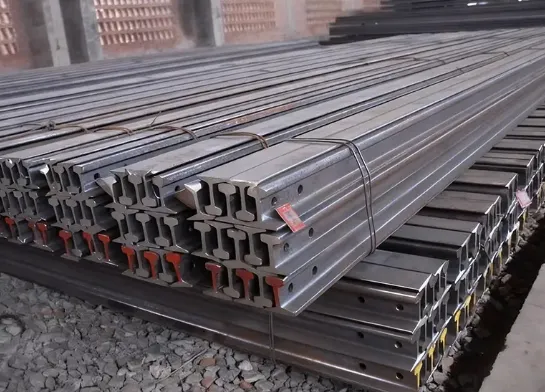
| 55Q | Mechanical property | Chemical composition(%) | |||||||||
| Yield strength | Tensile strength | Elongation | Hardness | C | Si | Mn | S | P | |||
| MPa | kg/mm² | MPa | kg/mm² | min | HBW | ≤ | ≤ | ||||
| ≥ | ≥ | ≥ | ≥ | ≥ | |||||||
| 685 | 69 | 197 | 0.50-0.60 | 0.15-0.35 | 0.60-0.90 | 0.04 | 0.04 | ||||
Engineering Suitability: The high carbon content prevents structural deformation along the thin 10 mm web and eliminates head flattening (mushrooming) under concentrated wheel contact. It is highly optimized for automated storage and retrieval systems (ASRS), workshop crane tracks, and heavy transfer carts.
Q235B (Low-Carbon Structural Steel / Grade R0550)
This material is selected as a highly cost-effective option for light-duty, static, or temporary transit layouts.
Metallurgical Profile: A carbon-manganese structural steel with a lower carbon envelope (typically 0.12% to 0.22%), making it highly ductile.
Mechanical Attributes:
- Tensile Strength: 370 to 500 MPa
- Yield Strength: ≥ 235 MPa
- Surface Hardness: ~140 HBW
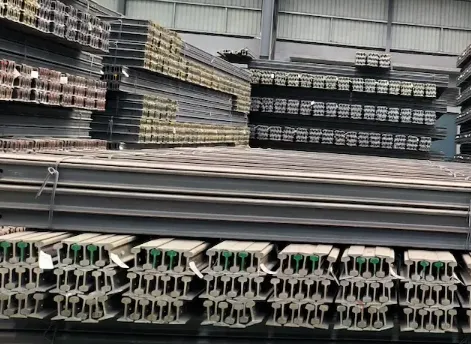
| Q235B | Mechanical property | Chemical composition(%) | |||||||||
| Yield strength | Tensile strength | Elongation | Hardness | C | Si | Mn | S | P | |||
| MPa | kg/mm² | MPa | kg/mm² | min | HB | ≤ | ≤ | ≤ | |||
| ≥ | ≥ | ||||||||||
| 235 | 24 | 375-460 | 38-47 | 26% | 0.12-0.22 | 0.35 | 0.30-0.70 | 0.045 | 0.045 | ||
Engineering Suitability: While it possesses lower wear resistance than 55Q, Q235B provides superior weldability and flexibility. It is ideal for floor-embedded tracks, lightweight indoor trolley lines, manual transfer layouts, and applications where rails must be frequently cut, modified, or welded on-site.
How Does the Chosen Material Impact the Wear Resistance and Fatigue Life of S20 Light Rail Systems?
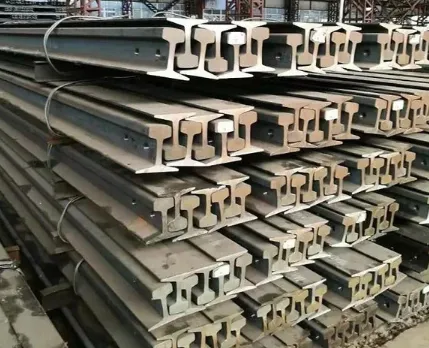
The choice between a medium-carbon steel (55Q / R0700) and a low-carbon structural steel (Q235B / R0550) acts as the primary differentiator in how an S20 light rail system tolerates surface degradation and cyclic mechanical stress. Because the S20 profile possesses a narrow 44 mm head and a slender 10 mm web, material microstructure directly dictates the system's defensive thresholds against structural failure.
| Material Selected | Wear Rate (Head Loss) | Fatigue Failure Susceptibility | Safe System Lifespan |
| 55Q / R0700 | Low (<0.5 mm per MGT*) | Delayed micro-crack initiation; excellent web fatigue resistance. | 15 to 25 Million Gross Tons (8–15 Years high-frequency use) |
| Q235B / R0550 | High (>1.2 mm per MGT*) | Accelerated surface spalling and potential lateral web deformation under cyclic loads. | <5 Million Gross Tons (Best restricted to low-use/static rails) |
Advantages of DIN S20 Rail Made from 55Q Steel
DIN S20 rails (weighing 19.8 kg/m) manufactured from 55Q steel (a high-carbon medium steel) provide an optimal blend of durability, load capacity, and impact resistance. They are widely used for industrial crane runways, mining operations, and warehouse logistics.
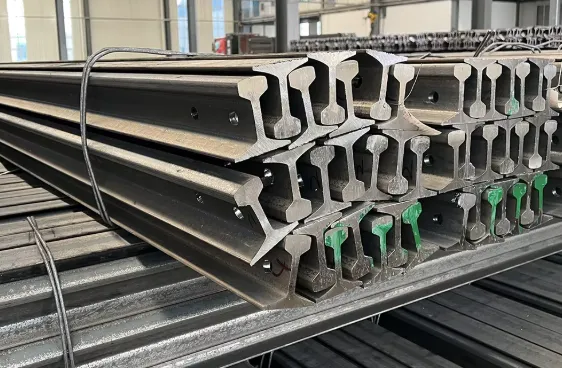
- Superior Wear Resistance: Compared to standard carbon grades like Q235, the higher carbon content of 55Q steel significantly increases surface hardness (typically ≥ 197 HBW). This translates to a longer lifespan, even when subjected to constant friction from moving trolleys and wheels.
- High Load-Bearing Capacity: Weighing roughly 19.8 kg per meter, the S20 profile is robust enough to safely guide overhead crane systems (up to ~ 5 tons) and support moderate-tonnage industrial transport cars.
- Excellent Impact & Vibration Resistance: 55Q material is formulated to handle repetitive dynamic forces and vibrations, preventing premature deformation or brittle fracturing in demanding environments like mining tunnels or factory floors.
- Precise Dimensional Accuracy: Because the rails are hot-rolled in strict compliance with the DIN 5901 standard, the S20 profile ensures a flawless fit with standard fastening accessories like fishplates, clamps, and baseplates.
Get a Quote in 24 Hours
GNEE RAIL manufactures premium DIN5901 steel rail and complete light track systems, stocking extensive reserves of 6m and 10m 20kg light steel rail units for immediate dispatch. We provide full customization including precision length sawing and custom web drilling, fully supported by our matching joint bars, base plates, and resilient tracking fasteners. Please contact us today to secure volume pricing and request technical drawings or certified material datasheets.


