

What is the weight per meter of A100 crane rail?
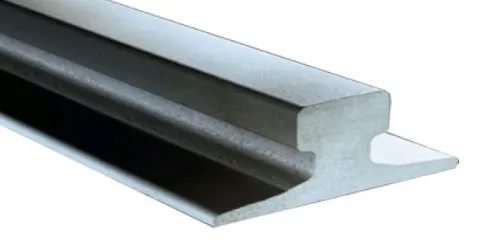
The standard weight of A100 crane rail is 74.3 kg per meter. This specific weight is a result of its unique low-profile geometry, which features a 100mm head width and a 200mm wide base. This mass-to-height ratio is engineered to provide maximum stability for heavy-duty crane systems, ensuring the rail can absorb high vertical pressures and lateral forces without deforming.
Obtain the Latest Price for A100 Crane Rail
What are the key technical specifications and dimensions of the A100 crane rail?
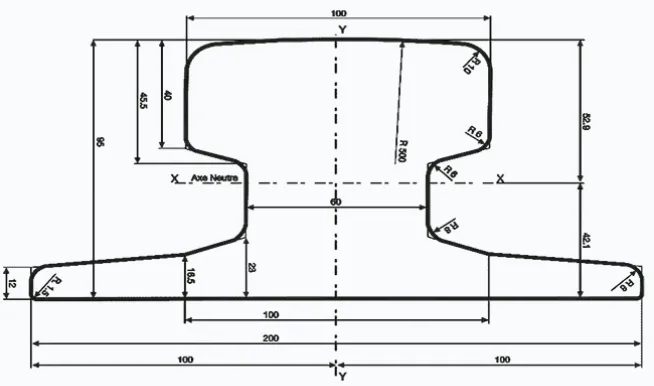
The dimension of the A100 crane rail follows the DIN 536 A100 rail dimensions details, which characterize it as a "low profile" rail. Unlike standard railway tracks, the A100 has a height of only 95mm compared to its massive 200mm base. This design ensures a low center of gravity, which is essential for overhead crane and gantry cranes that carry immense loads. The wide flange allows for a larger contact area with the steel girder or concrete foundation, effectively spreading the wheel load and reducing structural fatigue.
A 100 crane rail specification
| Type of Rail | Dimensions mm | Steel Grade | Weight(Kg/m) | |||
| Rail height/A | Bottom Width/F | Head Width/C | Web Thickness/t | |||
| A45 | 55 | 125 | 45 | 24 | 50Mn | 22.1 |
| A55 | 65 | 150 | 55 | 31 | 50Mn | 31.8 |
| A65 | 75 | 175 | 65 | 38 | U71Mn | 43.1 |
| A75 | 85 | 200 | 75 | 45 | U71Mn | 56.2 |
| A100 | 95 | 200 | 100 | 60 | U71Mn | 74.3 |
| A120 | 105 | 220 | 120 | 72 | U71Mn | 100 |
| A150 | 150 | 220 | 150 | 80 | U71Mn | 150.3 |
When reviewing the A100 crane rail specification, the metallurgical composition is equally critical. These hot-rolled flat bottom rails are produced using high-manganese and high-carbon steel, typically reaching a tensile strength of up to 1100 N/mm². The precision of the Profile rail A100 ensures that the crane wheels maintain consistent alignment, which is vital for the longevity of the entire DIN 536 A100 Rail System.
Why is the DIN 536 A100 rail preferred for heavy-duty industrial rail systems?
The primary reason for selecting RAIL A100 is its ability to handle extreme wheel loads while maintaining a compact vertical footprint. In many industrial facilities, vertical space is at a premium, and the low web crane rail design allows for a more efficient structural layout.
The A100 Crane Rail Of DIN536 Standard is specifically designed to resist the "crushing" effect on the rail head caused by high-tonnage cranes, making it the industry standard for steel mills, ports, and heavy manufacturing plants.
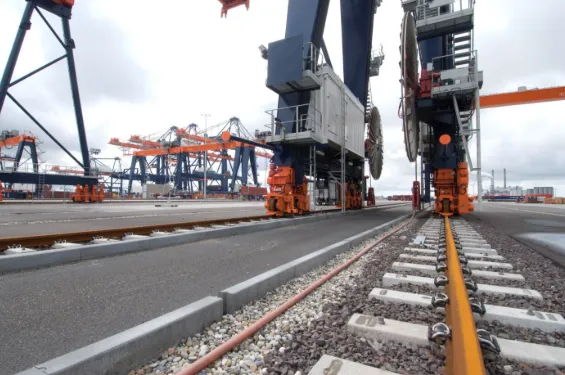
Furthermore, the standard length of the A100 rail is optimized for ease of installation and transport. Because it belongs to the European A sections low profile rails family, it is highly compatible with a wide range of crane rail accessories. Using the correct DIN 536 A100 rail dimensions ensures that the rail perfectly fits standard crane rail clips and crane rail pads, which are necessary to dampen vibrations and reduce noise during high-speed crane operations.
FAQ
- What is the theoretical weight of A100 rail, and does it vary?
The theoretical weight is 74.3 kg/m based on DIN 536 standards. While minor manufacturing tolerances exist, high-precision rolling ensures the actual weight remains consistent, which is crucial for calculating the load-bearing requirements of the supporting steel girders.
- Which steel grades are typically used for A100 crane rails?
A100 rails are usually available in grades like R700, R900, or R1100. The R1100 grade is the most wear-resistant option, featuring higher carbon and chromium content, making it ideal for high-frequency use in container terminals or heavy industrial workshops.
- Can A100 rail be used for curved crane tracks?
Yes, but the bending radius must be carefully managed. Due to the wide base and low web of the A100 profile, horizontal bending requires specialized hydraulic equipment to prevent web buckling and ensure the rail head remains perpendicular to the crane wheels.
- What type of clips are best for fastening DIN 536 A100 rails?
Adjustable weldable or bolted clips with rubber "noses" are recommended. These clips specifically accommodate the 200mm base width and low profile of the A100 rail, providing the necessary lateral force to keep the rail in place while allowing for thermal expansion.
- Is it possible to weld A100 rail to a steel plate directly?
Direct welding of the rail base to a steel plate is generally discouraged because it creates a rigid connection that leads to stress cracks. It is better to use a DIN 536 A100 Rail System that incorporates clips and pads to allow for flexibility and energy absorption.
- How do I distinguish between A100 rail and QU100 rail during procurement?
Check the base width and height. An A100 rail has a 200mm base and 95mm height, while a QU100 rail typically has a 150mm base and 150mm height. The A100 is much shorter and wider, which is the hallmark of the European "A" series design.
GNEE RAIL operates an integrated production facility from specialized steel smelting to high-precision hot-rolling, ensuring every A100 rail meets strict DIN 536 standards for hardness and internal purity. We maintain a large inventory of the full DIN 536 A-series to provide immediate shipping and offer professional technical support for customized rail system configurations.


