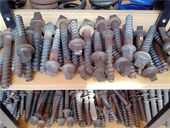
A rail joint is a structural interface that secures adjacent rail sections together using fishplates or bolted connectors, ensuring load transfer and alignment continuity while maintaining track gauge under operational stresses. GNEE RAILWAY RAILWAYL supplies rail joints for light and heavy GB rails, UIC50–UIC60, DIN536 crane rails, QU70–QU120, JIS 15KG–CR100, AS1085 31–89 kg, BS11, and AREMA/ASCE rails, with services including joint specification selection, supply, and on-site installation guidance.
What are check rail and fish plates?
Fish plates (or rail joints) are metal bars bolted to the sides of rail ends to connect them, ensuring proper alignment, stability, and allowing for thermal expansion. Check rails (or guard rails) are extra rails placed parallel to the inner rail on sharp curves or crossings to guide wheels, prevent derailments, and reduce wear.
Fish Plates (Rail Joint Bars)

- Purpose: Connects two rails together, ensuring smooth, continuous track.
- Function: Maintains alignment, provides vertical/lateral stiffness, and manages rail expansion.
- Location: Used at joints between rails (common in older tracks or insulated joints in modern tracks).
- Structure: Made of high-quality steel with bolts holding them in place.
| No. | Type | Material | Unit weight (kg/pc) | Standard |
| 1 | 136RE 36'' | 55# | 26.72 | AREMA |
| 2 | 115RE 36'' | 24.5 | ||
| 3 | 136RE 24'' | 22.3 | ||
| 4 | 115RE 24'' | 20.4 | ||
| 5 | 100-8 36'' | 15.6 | ||
| 6 | BS80O | 55# | 10.2 | BS |
| 7 | BS80R | 10.2 | ||
| 8 | BS75A | 8.86 | ||
| 9 | BS90A | 13.1 | ||
| 10 | BS100A | 15 | ||
| 11 | UIC50 | 55# | 18 | UIC |
| 12 | UIC54 | 22.8 | ||
| 13 | UIC60 | 27.4 | ||
| 14 | P65 | 55# | 29.7 | GOST |
| 15 | Insulated 60 | 23.2 |
Check Rails (Guard Rails)

- Purpose: Guides wheels, particularly to prevent the outer wheel from climbing over the rail on sharp curves or at switch crossings.
- Function: Reduces lateral wear on the outer rail.
- Location: Placed parallel to the inner rail on sharp curves or opposite the crossing nose.
- Structure: Often a smaller or specialized rail section placed inside the main track gauge.
How are rail fish plates manufactured?
Rail fish plates are manufactured primarily from high-strength steel (e.g., 45#, 50Mn, 42CrMo) using hot rolling or forging processes to ensure durability against heavy loads. The process involves heating steel billets, shaping them to fit rail profiles, CNC drilling bolt holes, and heat treatment to enhance strength, followed by surface anti-corrosion coating.
Key Manufacturing Processes:
- Material Selection: High-strength steel, often with high carbon content, is used for durability and resistance to wear and tear.
- Heating and Rolling/Forging: Steel is heated to high temperatures and passed through rollers to form the specific shape, or shaped using forging/blacksmithing techniques.

- Heat Treatment: A critical step, often involving normalizing, is performed to relieve internal stresses from the rolling process, ensure a uniform grain structure, and standardize mechanical properties across the batch.
- Machining and Drilling: CNC machines are used to drill bolt holes with high precision to ensure a perfect fit with rail joints.
- Surface Treatment: To prevent rust and corrosion, fish plates are treated with coatings such as galvanizing, spraying, or Dacromet coatings.
- Quality Control: Stringent checks are performed to ensure the plates meet industry standards (e.g., UIC, AREMA, EN, GB, CR series) for tensile strength and structural integrity.
Founded in 2008, GNEE RAILWAY RAILWAYL is a leading global manufacturer and supplier of railway components, specializing in high-quality rail fish plates (joint bars/splice bars) with strong production capacity and global service capabilities.
Our rail fish plate portfolio is comprehensive and compliant with international standards including UIC, AREMA, BS, DIN, and GB, covering light rail (8kg-30kg), heavy rail (38kg-75kg), and crane rail (QU70-QU120) systems. We offer diverse types such as insulated joint bars, bulged fish plates, and compromise rail joints,with precise specifications (4-hole/6-hole, 24-inch/36-inch), ensuring excellent mechanical performance.We uphold strict quality control supported by ISO 9001:2015 certification, an in-house inspection center, and third-party audits by SGS and BV. Our one-stop service includes customization, production, packaging, and after-sales support, tailored to clients' project needs.
Click here to obtain the detailed product catalog of GNEE RAILWAY RAILWAYL.