

What are the characteristics of seamless rails?
The so-called "seamless line" is to weld 25m long rails without drilling and quenching into 200m to 500m long rails by gas pressure welding or contact welding in the base factory, and then transport them to the track laying site, and then weld them into 1000m to 2000m in length, and lay them on the line to become a seamless line. If there are no difficulties in processing, transportation, and construction, theoretically, the "seamless line" can be infinitely long. This method of completely eliminating rail gaps is being adopted by some major trunk roads in my country's railways.
Connecting each 12.5m or 25m long rail into a track, it is obvious that there will be a joint every 12.5m or 25m. There is also a rail gap between the joints, which is about 6mm. The reason for leaving the rail gap is simple, which is to prevent the temperature force generated by the rail when it expands and contracts. Don't underestimate this temperature force. When the rail temperature changes by 1℃, each rail will withstand 1.645 tons of pressure or tension. When the rail temperature changes by 50℃, a rail will bear up to 82.25 tons of pressure or tension.
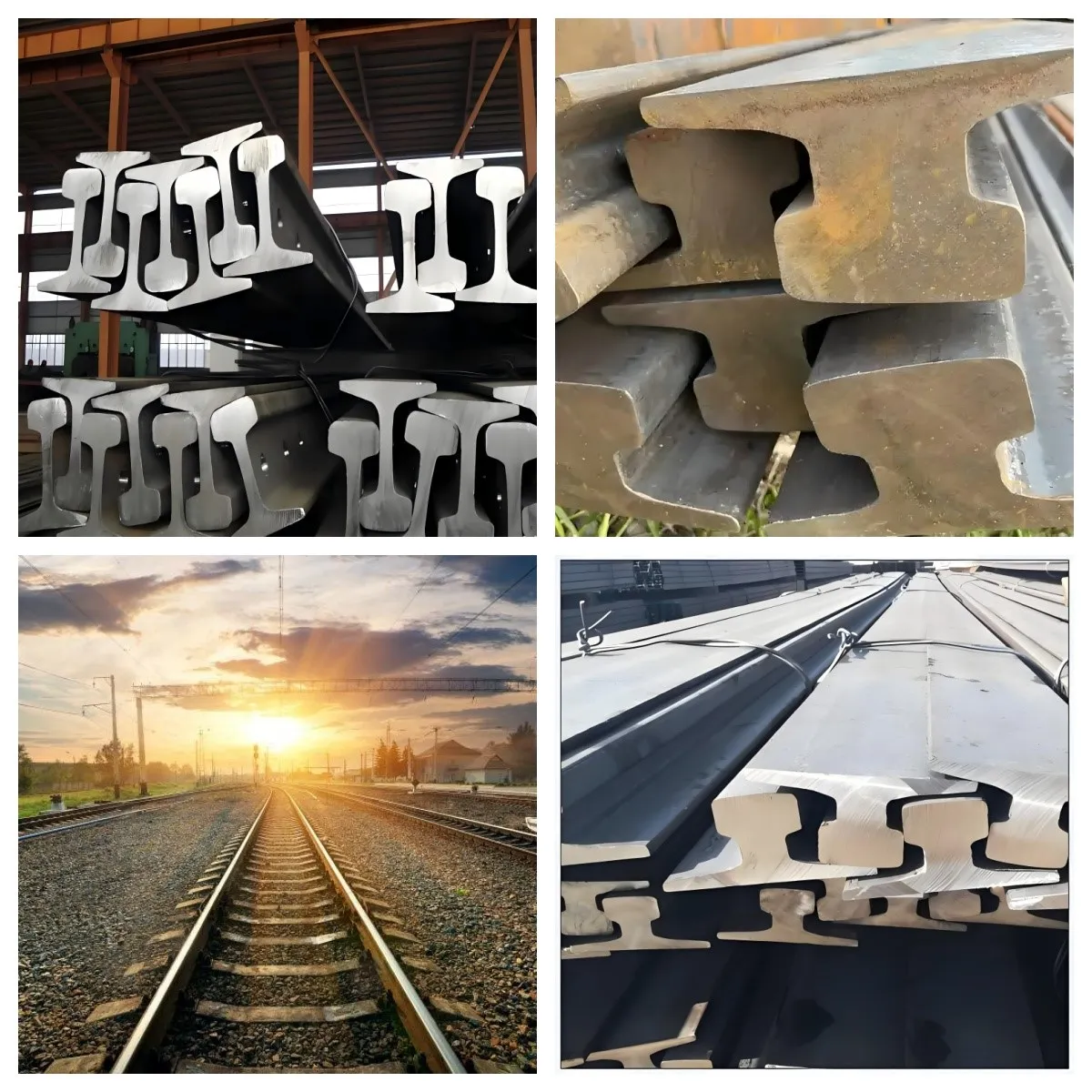
Such a huge force is enough to twist the rail, causing the track to be uneven, affecting the fast and safe operation of the train.
The rail gap solves the problem of thermal expansion, but another problem arises: this inconspicuous rail gap not only makes the train produce an annoying "clicking" sound when running, but more importantly, it causes the wheels and rails to collide, causing considerable damage to both, especially the wheels, and shortening the service life of the wheels.
In order to solve this problem, many people in and outside the industry are thinking about it. Especially those enthusiastic ordinary passengers, they have offered suggestions. The relevant railway departments have received a large number of suggestions and designs for improving track joints. However, despite the ever-changing suggestions and designs, the joints still exist. The best way is to simply eliminate the joints, which is what we call "seamless lines".


