

What is the basic structure of seamless rails?
The types of seamless lines are divided into two categories: temperature stress type and temperature stress release type. The temperature stress type is the basic structural type of seamless lines.
(I) The temperature stress type seamless line includes three parts: expansion zone, fixed zone and buffer zone.
The length of the expansion zone is determined by calculation, generally 50 to 100m. The length of the fixed zone is determined according to the line and construction conditions, and the minimum shall not be less than 50m.
The buffer zone is generally composed of 2 to 4 pairs of standard rails or factory-made shortened rails, 4 pairs when there are insulating joints, and 3 or 5 pairs when cemented insulating joints are used.
(II) The temperature stress release type seamless line is divided into automatic release type and regular release type.
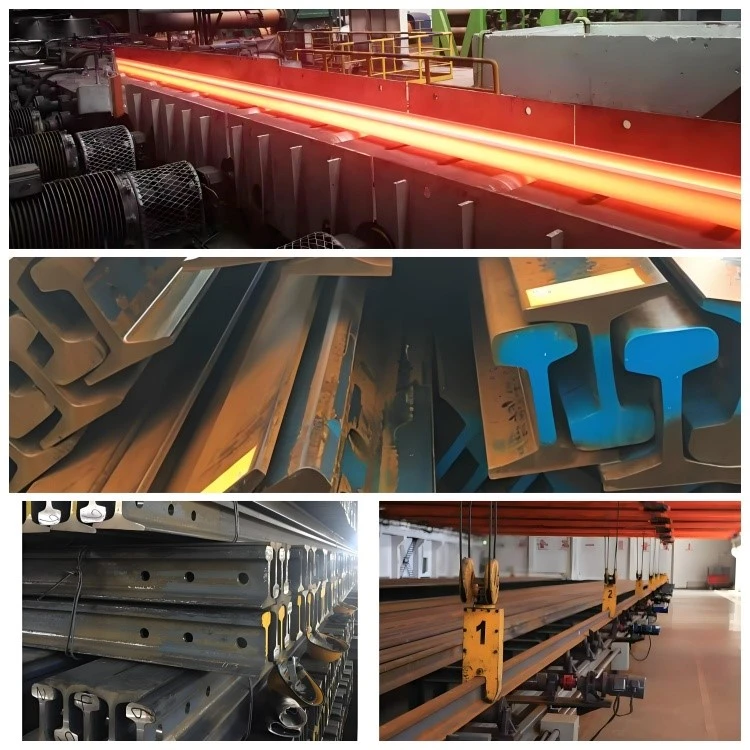
The regular release type seamless line replaces the buffer zone rails of different lengths at appropriate temperatures in spring and autumn every year to adjust the temperature stress of the rails. Its structural type is the same as the temperature stress type.
In areas with large temperature differences and on large bridges, in order to eliminate and reduce the influence of rail temperature force on the expansion and contraction of steel beams, an automatic temperature stress release type seamless line is used. The automatic release of temperature stress seamless line is to set a bridge rail expansion regulator between the welded long rails to release the temperature force.
Railway tracks with welded long rails. Standard rails without drilling and quenching at the rail ends are welded to a certain length, generally 250 meters, in the rail welding factory; then transported to the track laying site, and welded to the specified design length by thermite welding, generally 1000-2000 meters; finally laid into the line. Seamless lines are divided into two types: temperature stress type and stress release type; the former is composed of welded long rails and several standard rails at both ends, connected by splints and bolts; its structure is simple and easy to lay and maintain, but the rails have to withstand very high temperature forces.
It is generally suitable for areas where the annual rail temperature change is not more than 90C. It can also be laid in areas where the rail temperature change is greater than this, but under certain rail temperature conditions, the excessive temperature force inside the rails must be released regularly. The latter is equipped with temperature expansion regulators at both ends of the welded long rails to release the temperature force at any time.


