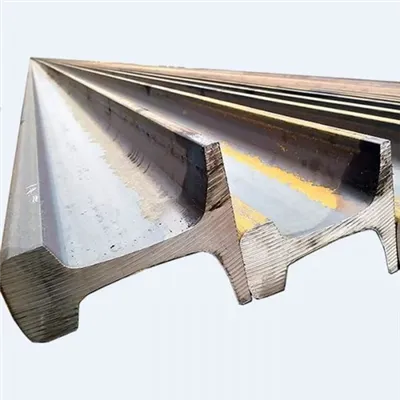
What Is a Rail Anchor
A railroad anchor, also called a rail anchor or railroad tie anchor, is placed under the rail bottom and clamps the rail with its curved design. Its side is pressed against the sleeper, so that the anchor resists the longitudinal movement of the rail. Rail anchors are made in one piece from spring steel, which can fasten the rails by providing friction, elasticity, and locking action. They are the primary anti-creep device on lines where rail movement must be controlled.
How Rail Anchors Work
Under braking and acceleration, rails tend to creep in the direction of traffic, dragging the sleepers along and disturbing the track geometry. The rail anchor grips the rail foot and bears against the side of the sleeper, converting the longitudinal force into a reaction at the sleeper face. Because the anchor is elastic, it maintains its grip even when the rail moves slightly under temperature change. Correctly placed anchors keep the rail from walking through the fastenings and reduce joint and fastener damage.
Materials and Heat Treatment
Rail anchors are manufactured from special T-shaped spring steel. After forging and heat treatment, the anchor has uniform strength and a lasting service life. The recommended material for heavy rail tracks such as 50 kg, 70 lb, 80 lb, and 90/91 lb rail is 60Si2MnA spring steel, with a carbon content of 0.56 to 0.64 percent, manganese of 0.60 to 0.90 percent, silicon of 1.60 to 2.00 percent, and chromium not exceeding 0.35 percent. Other materials include 45# steel and QT500-7 ductile iron for specific applications.
Specifications and Weights
Rail anchors fit various rail section dimensions, such as 50 kg, 85 lb, 90/91 lb, 115RE, 136RE, UIC54, and UIC60 rails, or other types according to customer drawings. For heavy track, the typical weight is about 800 grams per piece for 50 kg, 70 lb, 85 lb, and 90/91 lb rail sections. The available surfaces are plain oiled, color painted, zinc painted, or hot-dip galvanized. The reference standard is AS1085.10-2002 for rail anchors, together with DIN practice and ISO 9001 quality management.
Installation Notes
Anchors are installed on both sides of the sleeper at the correct orientation to resist the prevailing direction of rail movement. The anchor must seat fully against the rail foot and the sleeper side, and it should be checked after track tamping because lifting the track can loosen the grip. On electrified lines, anchors are selected and positioned to avoid interfering with bonding and signaling equipment.
Frequently Asked Questions
What does a rail anchor do? It clamps the rail foot and bears against the sleeper to prevent longitudinal rail creep.
What material is recommended for heavy track anchors? 60Si2MnA spring steel is recommended for 50 kg, 70 lb, 80 lb, and 90/91 lb rail.
How much does a typical rail anchor weigh? Typical anchors for heavy rail weigh about 800 grams per piece.
Which standard covers rail anchors? S1085.10-2002 is the reference standard for rail anchors, together with DIN practice.
Why must anchors be checked after tamping? Track lifting during tamping can loosen the anchor grip, so the seating must be re-checked after maintenance.