

A rail fish plate is a structural connector that allows jointed rails to behave as a continuous beam by transmitting bending moments and shear forces across rail joints. GNEE RAIL offers fish plates compatible with GB rail systems, UIC50–UIC60, DIN536 crane rails, QU crane rails, JIS rail standards, AS1085 profiles, BS11 sections, and AREMA/ASCE rails, with technical documentation support.
Types of Rail Joint
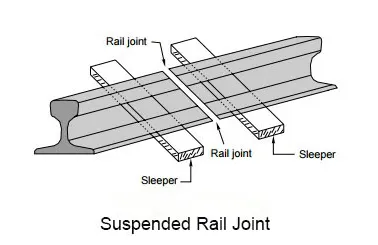
Rail joints connect adjacent rail ends to maintain track alignment, acting as critical, high-maintenance components that allow for expansion and contraction. Common types include suspended (between sleepers), supported (on a sleeper), insulated (for signaling), and compromise (connecting different rail sections) joints.
Primary Types of Rail Joints
- Suspended Joint: The most common type, where the joint is located between two sleepers. It offers better cushioning but requires higher maintenance.
- Supported Joint: The rail joint sits directly on a sleeper, providing better support but rarely used today.

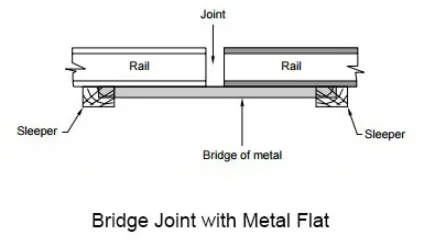
- Bridge Joint: A variation of the suspended joint where a metal plate (bridge) supports the rail ends, reducing bending stress.
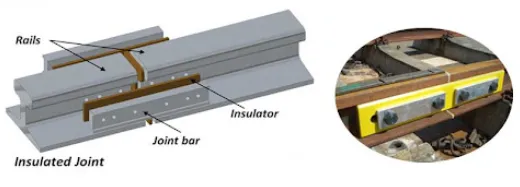
- Insulated Joint: Used in electrified tracks to provide electrical insulation for signaling, often using high-strength composite materials.
- Compromise Joint: Used to connect two rails of different profiles or sizes (e.g., changing from a 60kg to a 50kg rail).

- Welded Joint: While not a "joint" in the traditional sense, welding rails creates continuous welded rail (CWR), eliminating gaps and reducing maintenance.
- Joggled Joint: Used for temporary repairs on broken or cracked welded rails, often with an emergency clamp.
What is the use of joggled fish plate?
A joggled fish plate is a specialized, durable steel rail fastener featuring a central, curved, or offset, "joggled" profile, primarily used for repairing broken or fractured rails, safeguarding defective welded joints, and accommodating weld collars. It acts as an emergency clamp, allowing trains to pass at reduced speeds.

Key uses of a joggled fish plate include:
- Emergency Repairs: Used with 'C' clamps to fix broken rails, weld failures, or fractures, ensuring continuity of traffic.
- Weld Protection: Protects new or existing welded rail joints.

- Accommodating Misalignment: Compensates for slight, unexpected vertical or horizontal misalignments in the rail, as well as differences in rail-end geometry.
- Structural Stability: Ensures a secure connection, reducing wheel impact, noise, and vibration at joints.
- Versatility: Used for connecting different rail sections (e.g.,60kg to 52kg).
These components are crucial for maintaining safety and stability in track, especially during maintenance or when dealing with defective joints.
What is the difference between a joggled fish plate and a common rail joint?
A joggled fish plate is a specialized, shaped plate with a central "bulge" used for temporary emergency repairs of broken/welded rails or to clear weld beads, whereas a common (standard) rail joint uses flat, symmetric plates to connect identical rail ends permanently. Joggled plates enable safe passage over faults, while common joints ensure continuous alignment.

| Feature | Joggled Fish Plate | Common (Standard) Rail Joint |
|---|---|---|
| Design & Purpose | Features a central bulge (offset) to accommodate weld collars or cracked rail sections. | A standard, flat, and symmetrical plate designed to connect two rail ends of the same profile. |
| Application | Used for emergency repairs of broken welds, cracked rails, or to navigate high welding beads. | Used for permanent track assembly on regular, continuous track sections. |
| Operational Context | Permits temporary, reduced-speed traffic over the repaired section. | Designed to support regular traffic at full operational speeds. |
Founded in 2008, GNEE RAIL is a leading global manufacturer and supplier of railway components, specializing in high-quality rail fish plates (joint bars/splice bars) with strong production capacity and global service capabilities.

| Fishplate for UIC Standard Steel Rail | |||
| Steel Rail Type | Steel Rail Weight (KG/M) | Fishplate Standard | Fishplate Material |
| UIC54 | 54.43 | UIC | 45#,55# |
| UIC60 | 60.34 | ||
| Fishplate for BS Standard Steel Rail | |||
| BS50'O' | 24.833 | BS 47-1 | 55#,45# European Grade 700 |
| BS60A | 30.618 | ||
| BS75R | 37.041 | ||
| BS80A | 39.761 | ||
| BS90A | 45.099 | ||
| BS100A | 50.182 | ||
| BS113A | 56.398 | ||
| Joint Bar for AREMA 2007 Standard Steel Rail | |||
| 100RE(TR50) | 50.35 | AREMA 2007 | 45#,55#,AREMA Grade Steel |
| 115RE | 56.9 | ||
| 115-119RE | |||
| 132RE | 65.31 | ||
| 133RE | 66.1 | ||
| 136RE | 67.41 | ||
| 132-136RE | |||
| Fishplate For Chinese Standard Steel Rail | |||
| GB15KG | 15.2 | YB226-63 | Q235,45# |
| GB18KG | 18.06 | YB225-63 | |
| GB22KG | 22.3 | YB14-63 | |
| GB24KG | 24.46 | ||
| GB30KG | 30.1 | YB351-63 | |
| GB38KG | 38.733 | TB/T 2345-2008 | 45#,55# |
| GB43KG | 44.653 | ||
| GB50KG | 51.514 | ||
Our rail fish plate portfolio is comprehensive and compliant with international standards including UIC, AREMA, BS, DIN, and GB, covering light rail (8kg-30kg), heavy rail (38kg-75kg), and crane rail (QU70-QU120) systems. We offer diverse types such as insulated joint bars, bulged fish plates, and compromise rail joints,with precise specifications (4-hole/6-hole, 24-inch/36-inch), ensuring excellent mechanical performance.We uphold strict quality control supported by ISO 9001:2015 certification, an in-house inspection center, and third-party audits by SGS and BV. Our one-stop service includes customization, production, packaging, and after-sales support, tailored to clients' project needs.
Click here to obtain the detailed product catalog of GNEE RAIL.


