


Why are fishplates required for S20 light rail connections?
Fishplates (also known as joint bars) are mandatory mechanical splice elements used to connect sequential sections of S20 light rail. Because light track networks are highly sensitive to dynamic wheel shock and structural misalignment, fishplates serve three critical engineering functions.
1. Maintaining Perfect Face-to-Face Alignment
The S20 rail features a narrow running surface (44 mm head width) and a thin structural profile (10 mm web thickness).
- The Mechanism: Fishplates are engineered to fit precisely into the fishing angles-the sloped cavities beneath the rail head and above the rail base flange.
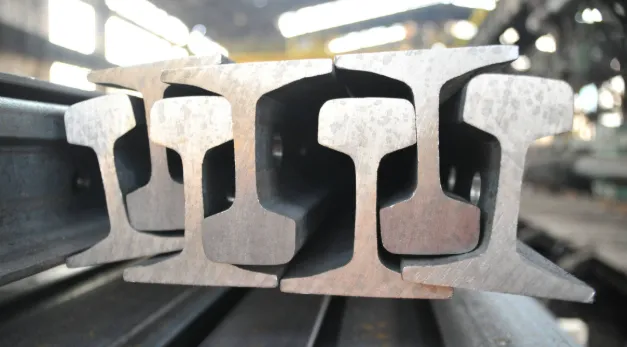
- The Benefit: By clamping tight against both sides of the web, the fishplates lock the two rail ends into a perfectly level horizontal and vertical plane. This prevents structural step-offsets that would cause automated guided vehicles (AGVs) or crane wheels to derail.
2. Continuity of Structural Load Distribution
A rail joint is inherently the weakest geographic coordinate in a track runway. Without reinforcement, when a crane wheel passes directly over the gap between two independent S20 rails, the leading rail segment undergoes localized bending stress (cantilever deflection), causing it to sag.
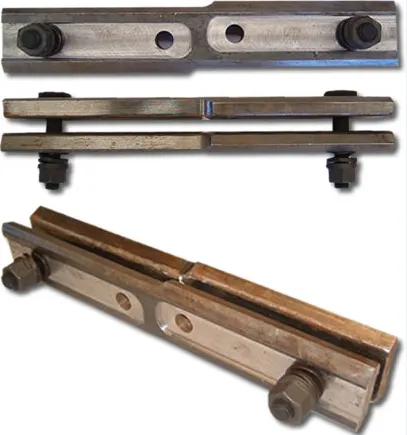
Fishplates bridge this physical gap, transferring the vertical bending moments and lateral shear forces across the joint. This distribution transforms separate rail sections into a single, continuous beam, protecting the under-rail pads and mounting clips from premature fatigue.
3. Accommodating Thermal Expansion and Contraction
Unlike continuous flash-butt welding, which creates a rigid joint susceptible to buckling in hot weather, a bolted fishplate connection allows the track to breathe.
The bolt holes drilled into the S20 rail web are intentionally designed slightly larger (oval or oversized) than the diameter of the joint bolts. This mechanical clearance allows individual 6-meter or 10-meter S20 rail segments to expand and contract linearly during temperature transitions without causing lateral track distortion or joint breakage.
DIN Standard Fish Plate
A DIN standard fish plate (or rail joint bar) is a metal connector used to securely bolt two sections of railway or crane track end-to-end. Governed primarily by DIN 5902:1995, these plates ensure structural stability, safe load transfer, and proper alignment across heavy machinery and mainline tracks.
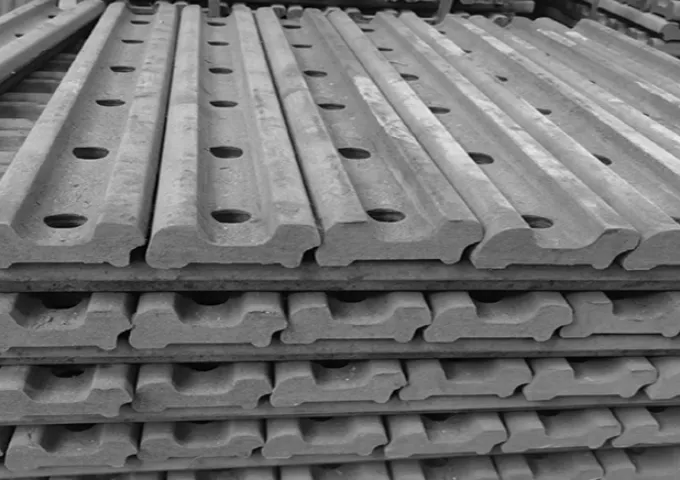
| Model | Holes | Rail Compatibility |
|---|---|---|
| Fl10, F114 | 4 or 6 holes | Light to medium rail profiles |
| F118, Fl20 | 4 or 6 holes | Medium rail systems |
| F130, F133 | 4 or 6 holes | Heavy-duty port cranes |
| F141-49, F141-54 | 4 or 6 holes | Extreme-load mining/steel mill rails |
Material Options
| Material | Key Properties | Use Case |
|---|---|---|
| Q235 | High ductility, cost-effective | General industrial rails |
| 55# Steel | High strength, wear-resistant | Heavy-load crane rails |
Why Do Fishplates Mitigate Vertical Deflection and Joint Sagging in Light Rail S20 Lines?
The intersection between two discrete S20 steel rails represents the weakest zone in a continuous track layout if left unsupported by mechanical fishplates. When a heavy axle transitions across an open joint, the leading rail tip deflects downward under the vertical wheel pressure while the receiving rail tip remains elevated, creating a temporary vertical step. Without the rigid bridging effect of dual fishplates, this repetitive vertical pounding rapidly deforms the rail head ends and causes severe ballast or tie degradation.

By bolting two matching joint bars tightly into the fishing spaces on either side of the 10.00 mm center web, engineers create a unified structural beam. This mechanical configuration allows a portion of the vertical shear stress to pass smoothly through the fishplate body into the adjacent rail segment before the wheel actually crosses the gap.
The precise structural mechanisms that control joint sagging across standard DIN 5901 light rails include these operational parameters:
Flange Slope Wedging Action: The top and bottom contours of the fishplate wedge tightly against the under-head and base slopes, locking the rail tips.
- Moment of Inertia Support: The vertical cross-section of the joint bar supplements the section modulus of the 19.80 kg/m rail profile at its weakest point.
- Sleeper Load Distribution Shift: Bridged joints distribute localized downward forces over multiple underlying tracking ties, preventing single-tie indentation.
- Impact Force Absorption Zone: The bolted interface absorbs a significant portion of the dynamic wheel impact energy, shielding the tracking foundation.
FAQ
- What is the standard bolt hole configuration for a DIN 5901 S20 rail fishplate?
Standard S20 light rail fishplates are manufactured in 4-hole or 6-hole configurations depending on the total expected axle load of the track installation. The holes are precision-punched in a linear pattern matching the spacing of the pre-drilled holes in the DIN S20 rail web, ensuring immediate alignment during field assembly.
- Can I weld an S20 rail joint instead of using mechanical fishplates?
Yes, S20 rail segments can be joined using thermit welding or arc welding procedures to create a completely seamless track surface. However, mechanical fishplates are widely preferred for light rail networks because they allow for fast track modifications, simple component replacement, and cost-effective installation without specialized welding gear.
- How often should fishplate bolts on an S20 steel track rail line be inspected?
For active industrial tracks and mining corridors, fishplate bolts should undergo visual checking and torque verification every three to six months. Continuous wheel vibrations can gradually loosen joint nuts, which reduces the clamping force of the bar and increases the risk of joint sagging or rail end cracking.
- What causes fishplates on light rail S20 systems to crack near the center?
Fishplate cracking typically occurs due to structural fatigue caused by prolonged joint sagging or severe over-tightening of the joint bolts. When underlying sleepers fail to support the joint evenly, the bar experiences extreme cyclic bending stresses every time a material car passes, eventually leading to structural failures.
- Are S20 light rail joint bars compatible with lighter S18 tracking profiles?
No, standard S20 joint bars are not compatible with S18 rails because the total vertical height, head dimensions, and fishing angles differ between the two profiles. Attempting to use an S20 bar on an S18 web prevents proper face contact, leaving the joint mechanically weak and unstable.
Get a Quote in 24 Hours
GNEE RAIL manufactures premium DIN5901 steel rail and complete light track systems, stocking extensive reserves of 6m and 10m 20kg light steel rail units for immediate dispatch. We provide full customization including precision length sawing and custom web drilling, fully supported by our matching joint bars, base plates, and resilient tracking fasteners.Please contact us today to secure volume pricing and request technical drawings or certified material datasheets.


