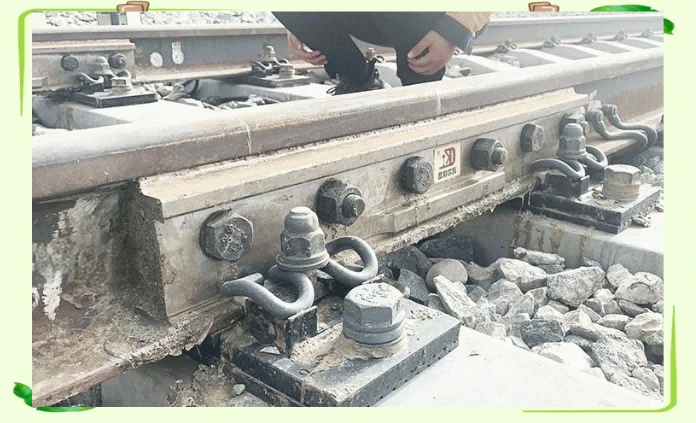
Diversity of rail joints
Rail joints can be further divided into various types, such as ordinary joints, insulating joints, frozen joints, cemented joints, special-shaped joints, expansion joints and vibration-damping joints, according to their performance and use.
1 Composition of ordinary joints
As an important part of rail connection, ordinary joints usually include key components such as splints, bolts and spring washers. These components work together to ensure the stability and safety of rail joints.
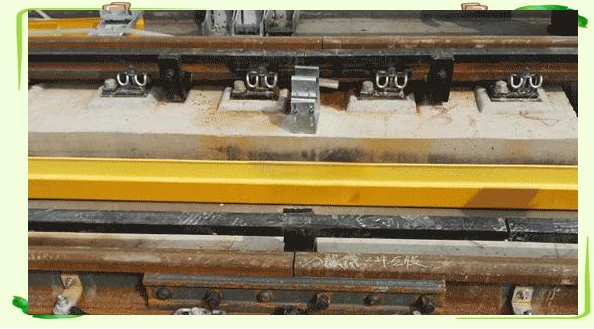
2 Characteristics of insulating joints
Insulating joints are important components in rail connections. They are designed to provide electrical insulation while ensuring the stability of the connection. This type of joint effectively blocks the direct conduction of current by setting insulating materials between the rails and the splints, thereby ensuring electrical safety. At the same time, its structure is strong and can withstand vertical loads, lateral displacements and various dynamic forces to ensure the stability of the rail connection.
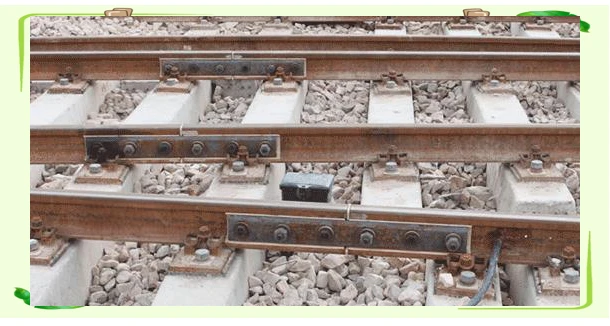
3 Frozen joints
Frozen joints are a type of joint that tightly connects rails through splints and high-strength bolts to ensure that the rail ends are tightly fitted or a small rail gap is reserved, thereby effectively locking the expansion and contraction of the rails. At present, the widely used rail joint freezing technology at home and abroad mainly includes the following two methods.
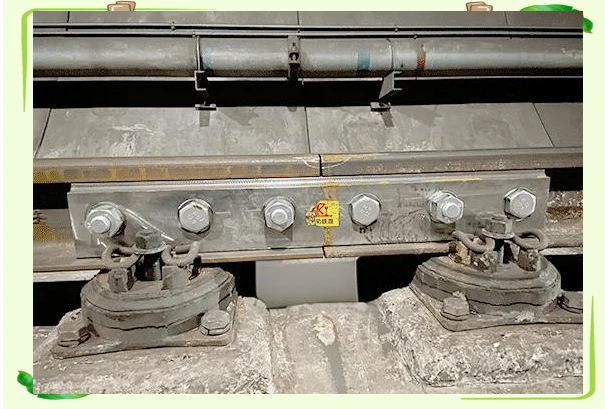
4 Glued joint
Glued joint, also known as glued insulation joint, is a rail insulation joint designed to meet the cancellation of buffer zone for super-long seamless lines. This joint effectively improves the insulation performance and stress state of the joint by gluing all the insulation parts into a whole, and is prefabricated by the manufacturer or glued on site, while enhancing the resistance of the rail joint.