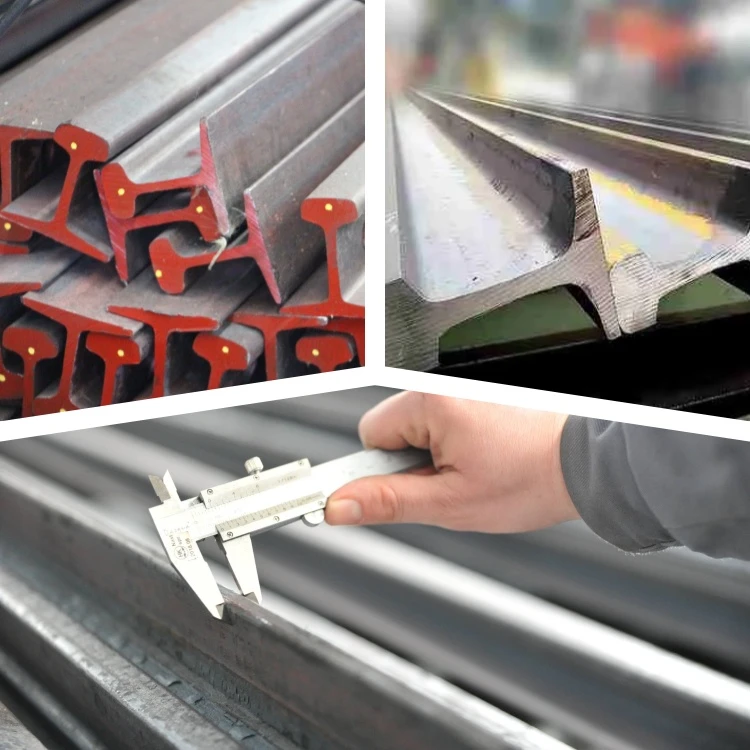
Selection of crane rails
Crane rails are mainly divided into special rails, railway rails, square rails and P-type rails, among which P-type rails are the mainstream choice. The following is a detailed answer to the classification and selection of crane rails:
1. Classification of crane rails
Special rails: designed specifically for cranes, suitable for cranes of specific models and specifications.
Railway rails: including various models such as P15, P18, P24, P38, P43 and P50, corresponding to different rail widths and usage requirements, suitable for cranes that need to bear large loads and high-speed operation.
Square rails: Although once widely used, they are now less used due to the large wear on the wheels.
P-type rails: With its excellent performance and wide adaptability, it has become the mainstream choice for cranes of all sizes. According to the rail width, it is divided into 40mm, 50mm, 60mm, 70mm, 80mm, 90mm and 100mm and other specifications.
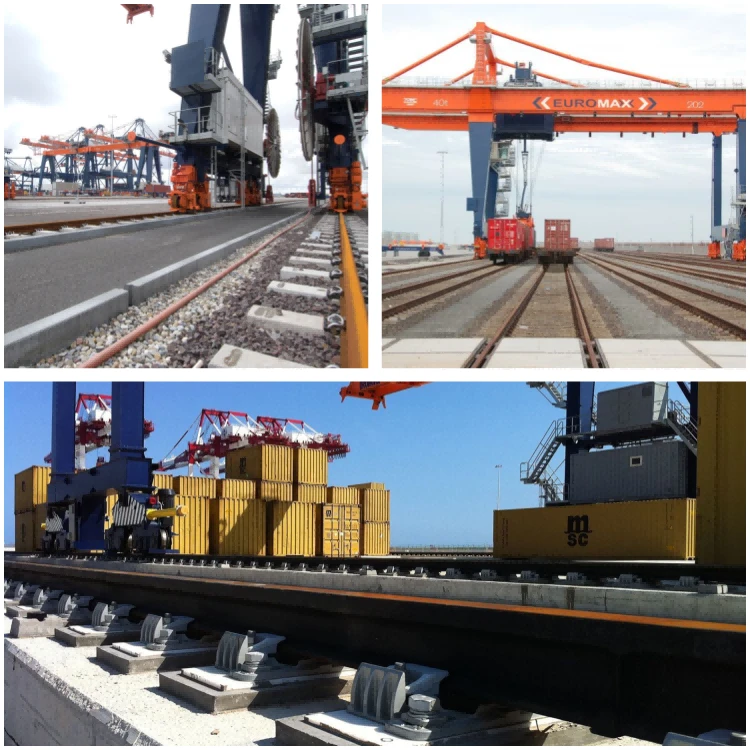
2. Selection of crane rails
Consider wheel diameter: wheel diameter is the key factor in determining which rail to use. For example, 200mm wheels need to match special rails, while wheels of 300mm and above need to match P-type rails. For certain large cranes, such as those with wheel diameters of 800mm and 900mm, QU70 and QU80 P-type rails are required.
Matching rail model: When selecting crane rails, the model of P-type rails or railway rails should be reasonably matched according to the wheel diameter and actual needs. Ensure the matching degree between the rails and wheels to reduce wear, improve operating stability and extend service life.
Consider actual needs: In addition to the wheel diameter, factors such as the use environment, load requirements, and operating speed of the crane should also be considered to comprehensively select the most suitable rail type.
In summary, when selecting crane rails, the wheel diameter, rail model, and actual needs should be comprehensively considered to ensure the stable operation and long life of the crane.