Special material for anchoring spikes in railway track systems - spike anchors
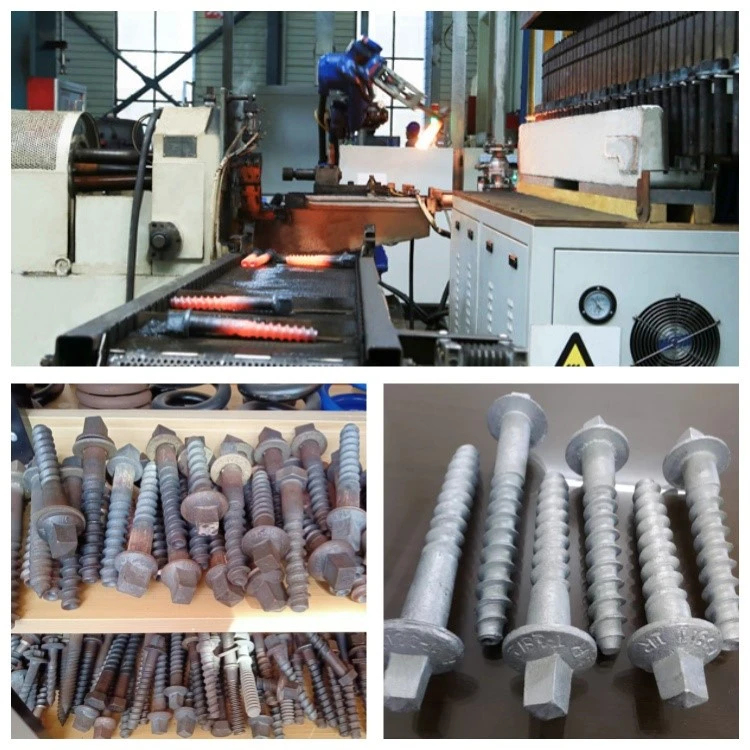
Spiked anchors are a special material used for anchoring spikes in railway track systems. In railway track structures, spikes play a key role in connecting rails and sleepers, and spike anchors are materials that ensure that spikes are firmly fixed in sleepers. It can effectively bond spikes to sleepers to prevent them from loosening or pulling out under the action of various forces (such as lateral impact, longitudinal tension and vibration) generated by train operation, thereby ensuring the stability of the rails and ensuring the safe operation of trains.
Railway track field
1.Ordinary railway tracks:
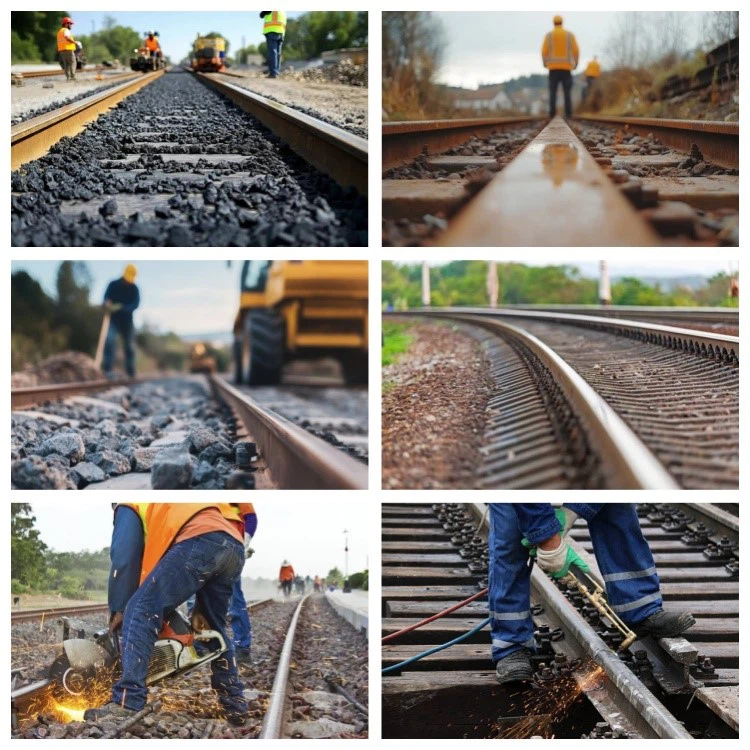
In traditional ballasted track systems, spike anchors are widely used to fix spikes on sleepers. Whether it is a wooden sleeper or a concrete sleeper, it can play a good anchoring role. During the operation of the train, the spike anchor ensures that the spikes are tightly connected to the rails and sleepers, bearing the vertical pressure, lateral impact and longitudinal tension of the train. For example, in freight railways, heavy-loaded trains pass frequently, and spike anchors can effectively prevent the loosening of spikes, ensure the stability of the track structure, and ensure the safe operation of trains.
2.Urban rail transit tracks:
They are also used in the construction and maintenance of urban rail transit such as subways and light rails. These track systems are usually located underground or on the ground in cities, and have extremely high requirements for the stability and safety of the tracks. Spike anchors are used to anchor spikes in the track fastener system to help maintain the precise position of the rails to meet the needs of frequent starts and stops and high-speed driving of urban rail transit.
Performance characteristics
1.High pull-out resistance:
This is one of the most important properties of spike anchors. It needs to be able to withstand the huge tensile force on the spikes when the train is running to prevent the spikes from being pulled out. Generally, the pull-out strength of qualified spike anchors can reach more than 60kN, and excellent products have higher pull-out strength.
2.Good fluidity:
In order to smoothly fill the gap between the spikes and the sleeper holes, the spike anchor needs to have good fluidity. Its fluidity is usually around 180-220mm, so that during construction, the anchor can fully fill the pores under the action of gravity or slight vibration to ensure the quality of anchoring.
3.Appropriate setting time:
The initial setting time is generally around 3-5 minutes, which can ensure that the construction personnel have enough time to insert and adjust the spikes, and will not affect the construction progress due to too long time. The final setting time is around 10-15 minutes. After the final setting, the anchor basically reaches a certain strength and can initially withstand a certain external force.
4.High durability:
Since the railway track is in a long-term outdoor environment, it must withstand the influence of wind, sun, rain, train vibration and other factors. The spike anchor needs to have good durability and be able to maintain its performance during many years of use, and will not experience strength reduction and weakened adhesion due to environmental factors.