

Structure and installation method
Usually fixedly installed in a specific location, usually fixed to the dock foundation or ground foundation by anchor bolts. For example, the fixed load-bearing variable-length crane GQ1* has its bottom firmly fixed to the port ground and the overall structure is stable. After its installation position is determined, the working range is mainly the area covered by the variable-length and rotation of its boom, which is relatively fixed. Because it does not need to move, its structure is relatively simple, there is no walking mechanism for movement, the center of gravity is low, and the stability is good. Rail-mounted crane
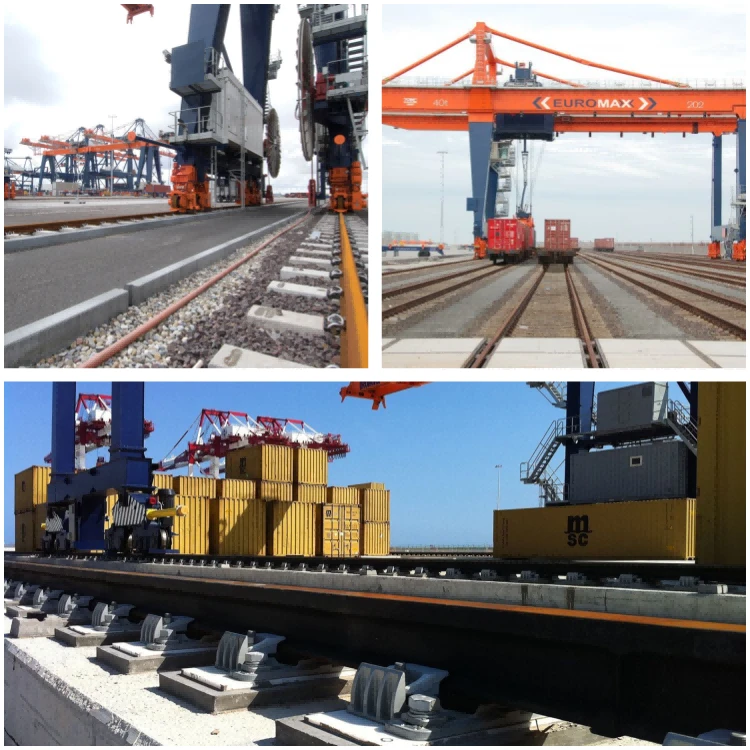
Installed on the track, such as the rail-mounted container gantry crane, it has a special walking wheel at the bottom, and the walking wheel runs along the laid track. The laying of the track depends on the layout of the port and the operation requirements, and can guide the crane to move on a certain route.
The structure is relatively complex because it is necessary to consider the stability, guidance and power transmission of running on the track. In addition to the lifting and luffing mechanisms, there are also walking mechanisms, including motors, reducers, wheels and other components to ensure that the crane can run smoothly along the track.
Working range and flexibility
The working range is limited, mainly depending on the length, height and rotation angle of the boom. For example, the fixed non-loaded luffing crane GQ2 Type +, it can only operate within a certain radius and height range around its fixed position. However, it can perform efficient loading and unloading operations within this fixed range, especially for some specific loading and unloading points or scenes that require frequent operations in a small range. It has poor flexibility and cannot be transferred to other operating areas as quickly as rail cranes. If the port needs to carry out loading and unloading operations at a distant location, fixed cranes cannot be used unless they are reinstalled or other auxiliary equipment is used to transfer the goods. Rail cranes have a wide working range and can be moved to different locations along the track for loading and unloading operations.
Taking the rail-mounted container gantry crane as an example, it can cover a longer area in the port by moving on the track, such as moving along the track at the front of the terminal, and operating ships docked at different locations or container stacking yards in different areas of the terminal. It has high flexibility and can quickly adjust the operating position according to the port's operation plan and actual cargo distribution, effectively improving the efficiency of equipment use, especially when dealing with cargo loading and unloading tasks distributed in a larger area. The advantages are obvious.


