


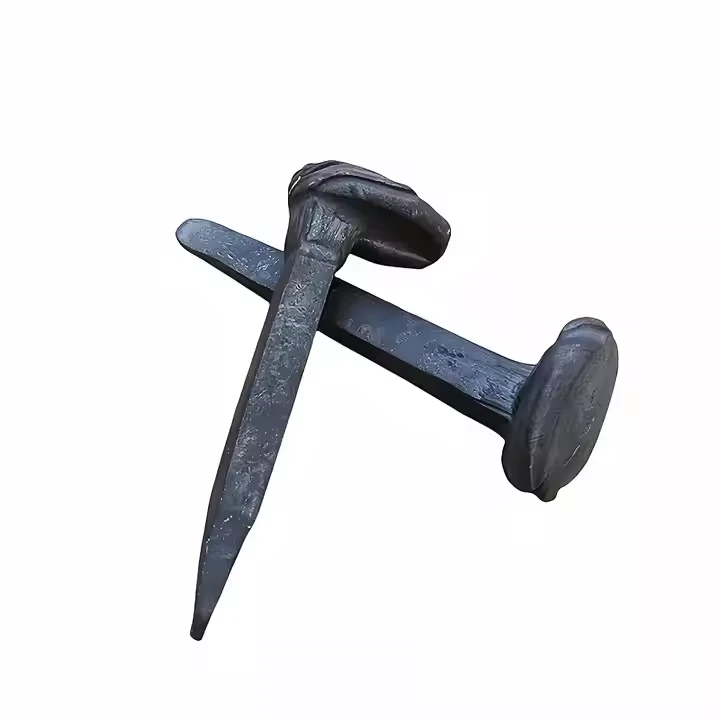
↵Rail Screw Spike Fastening System

The Railway Dog Spike represents the archetypal rail fastening solution from the steam locomotive era, characterized by its L-shaped head and rectangular tapered shank. This forged steel component functions through pure mechanical interference-driven through predrilled holes in the rail base and into wooden sleepers, where wood fiber compression creates frictional retention. While technologically obsolete for mainlines, it remains a functional artifact in heritage railways, mining operations, and temporary tracks due to its brutal simplicity and demountability.
Technical Specifications:
| Perspective | Core Material Intelligence | Performance Limiter | Modern Analytical Method | Conservation Challenge |
|---|---|---|---|---|
| Historical Materiality | Forged Grain Alignment & Rust Synergy | Wood Variability & Fatigue | Metallurgical Analysis & Digital Archiving | Authentic Material Sourcing |
| Biomechanical Interaction | Wood Fiber Compression Memory | Progressive Cavitation & Rail Cracking | Acoustic Emission Monitoring & FEM Simulation | Predicting Degradation in Heritage Contexts |
| Preservation Engineering | Balance of Authenticity/Safety | Inspection Labor Intensity | Non-Destructive Evaluation & Risk Modeling | Implementing Invisible Modernizations |

Functional & Engineering Perspective
Forging Heritage: Manufactured through traditional drop-forging processes that align steel grain structure longitudinally, providing superior shear resistance compared to cast alternatives of the period.
Metallurgical Evolution: Early versions used basic wrought iron or low-carbon steel (0.1-0.2% C), while modern reproductions employ medium-carbon steel (0.3-0.5% C) for improved durability while maintaining bendability.
Wood Composite Behavior: The spike's performance is intrinsically tied to the moisture content and species of timber-hardwoods like oak provide 30-50% higher withdrawal resistance than softwoods like pine.
Maintenance & Operational Perspective
- Impact Force Transmission: The driving process (typically with a 4kg spike maul) delivers 80-100 Joules per blow, generating shockwaves that pre-compress wood fibers 3-5mm beyond the shank diameter.
- Withdrawal Resistance Physics: Retention derives from three mechanisms: elastic recovery of compressed fibers (40%), fiber-tearing friction (35%), and geometric interlock with distorted grain structures (25%).
- Progressive Loosening Dynamics: Each wheel passage induces micro-oscillations of 50-200μm amplitude, gradually enlarging the wood cavity through fatigue compression and moisture migration.

Gnee Professional supplier


Hot Tags: dog spikes rail fastening system, China dog spikes rail fastening system manufacturers, suppliers, factory, track spikes production, sturdy rail spikes, long lasting rail spikes, rail spikes workshop, efficient rail spikes production, track spikes factory


