

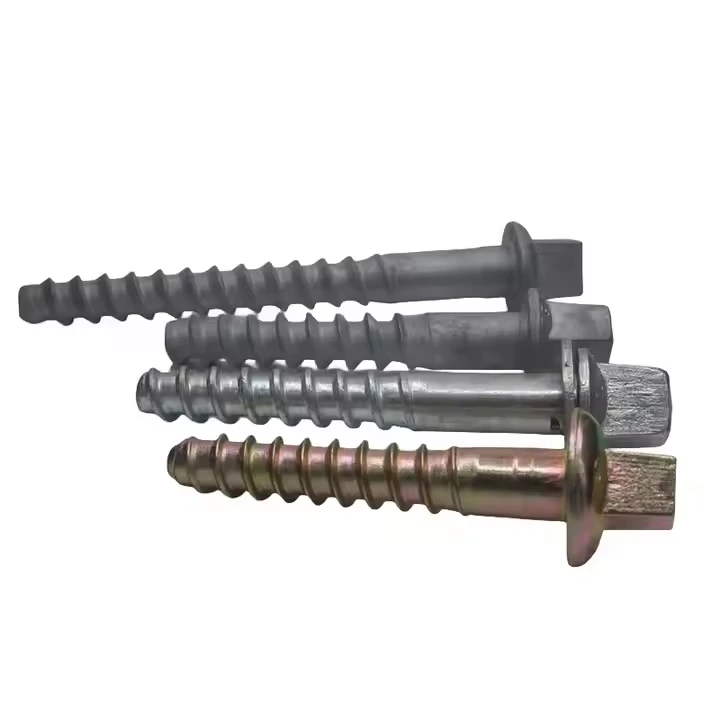


↵Rail Screw Spike Fastening System

The Railway Screw Spike is a threaded mechanical fastener designed to generate axial clamping force through torque-controlled installation into wooden or composite sleepers. Featuring a coarse-pitch square or helical thread and a forged head (typically square for wrench engagement), it represents the evolutionary bridge between primitive driven spikes and modern elastic fasteners. Unlike its predecessors, it provides measurable preload, repeatable installation, and retrievability-making it the persistent solution for heavy-haul timbered tracks, bridge transoms, and specialized industrial applications where resilience and demountability are paramount.
Technical Specifications:
| Perspective | Engineering Principle | Key Performance Metric | Technological Differentiator | Niche Application |
|---|---|---|---|---|
| Thread Mechanics | Quantified Axial Preload via Torque | 25-40 kN Clamping Force with <15% Variance | Rolled Thread Fatigue Optimization | Timber Sleepers Under Dynamic Loading |
| Installation Tribology | Controlled Rotational Engagement | Consistent Torque-Tension Coefficient (K=0.18-0.22) | Thread Lubrication & Fiber Preservation | Precision Installations in Heritage or Critical Structures |
| Lifecycle Economics | Demountable Precision Fastening | 4-7× Longer Maintenance Interval vs. Dog Spikes | Total Cost Modeling for Heavy-Haul Timber Tracks | Mining, Forestry & Bridge Track Systems |

Functional & Engineering Perspective
Coarse-Pitch Thread Geometry: The 4-6 threads per inch design maximizes thread engagement depth in wood fibers while minimizing shear-induced thread stripping during installation and dynamic loading.
Axial Preload Quantification: Installation torque (typically 300-500 N·m) creates measurable tensile stress in the shank, translating to 25-40 kN of clamping force that actively compresses the rail/baseplate against the sleeper.
Load Distribution Hierarchy: Under vertical loads, force transfers through: 1) baseplate bearing surface (60%), 2) thread flank pressure (25%), and 3) shank friction (15%)-a fundamentally different mechanism from friction-only dog spikes.
Maintenance & Operational Perspective
- Torque-Tension Relationship Engineering: Modern installation protocols use calibrated torque wrenches or impact tools with shear-pin limiters, ensuring consistent preload within ±15% variance-impossible with manual hammering.
- Thread Lubrication Science: Application of zinc-rich or molybdenum-disulfide paste reduces friction coefficient variability, with specific formulations that prevent wood fiber adhesion to thread flanks.
- Wood Fiber Preservation Strategy: The rotational installation minimizes fiber tearing compared to impact driving, preserving the sleeper's structural integrity and allowing 3-5 reinstallation cycles in the same hole with epoxy reinforcement.

Gnee Professional supplier


Hot Tags: screw spikes rail fastening system, China screw spikes rail fastening system manufacturers, suppliers, factory, railroad spikes workshop, reliable rail spikes, maintenance free rail spikes, track spikes factory, cost effective rail spikes, rail spikes factory


