



↵Rail Clamp Fastening System

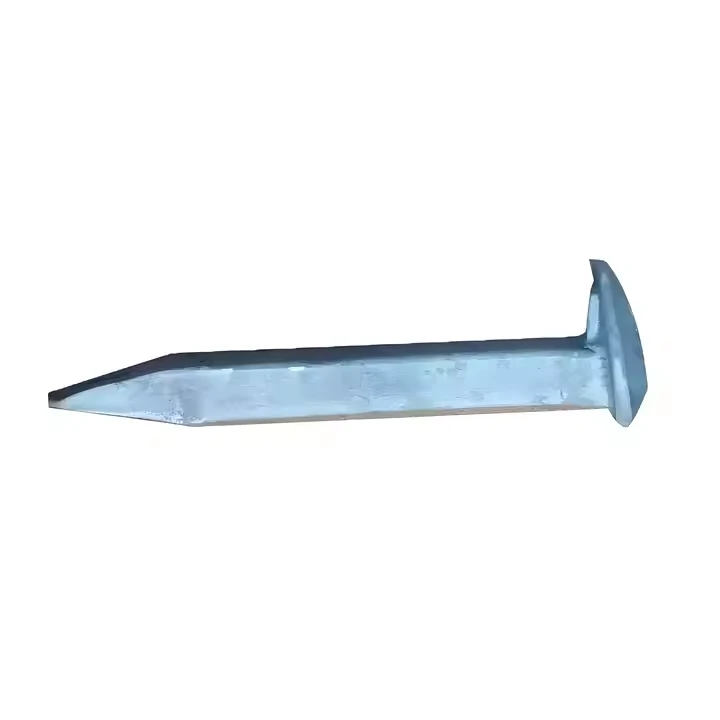
The Railway Dog Spike is a traditional rail fastening component, characterized by a square-shank nail with an offset L-shaped head. It is hammer-driven through pre-punched holes in the base of a flat-bottomed rail and into a wooden sleeper (tie) to provide basic longitudinal and lateral restraint. Predominantly used in historical, low-speed, or secondary tracks, it represents an early generation of rail fixation technology.
Technical Specifications:
| Perspective | Core Principle | Key Limitation | Primary Application Context | Dominant Cost Driver |
|---|---|---|---|---|
| Historical & Construction | Manual, Wood-Reliant Fixation | Lack of Precision & Adjustability | Heritage, Industrial, & Low-Traffic Sidings | Skilled Manual Labor |
| Mechanical & Performance | Frictional/Wedging Hold in Wood | Progressive Loosening & Rigid Response | Tracks with Timber Sleepers & Low Dynamic Loads | High Maintenance Frequency |
| Operational & Economic | Minimalist, Low-Capital System | Very High Recurrent Labor Maintenance | Networks Prioritizing Low Initial Investment | Lifecycle Labor Costs |

Functional & Engineering Perspective
Pioneer Rail Fastening: Represents one of the earliest and simplest methods of securing rails, fundamental to the initial global expansion of railway networks in the 19th and early 20th centuries.
Manual Installation Process: Installation is entirely manual, requiring a spike maul (sledgehammer) to drive the spike through the rail base hole and into the wooden tie, a process reliant on skilled labor.
Wooden Tie Dependency: Its design and function are intrinsically linked to the use of timber sleepers, as the spike's holding power relies on the compression and friction within the wood grain.
Maintenance & Operational Perspective
- Frictional & Wedging Retention: Its holding power derives primarily from friction between the spike shank and the compressed wood fibers, and secondarily from the wedging action of its rectangular shank.
- Prone to Loosening: Subject to progressive loosening ("working out") due to dynamic train loads, moisture-induced wood shrinkage/swelling, and wood decay, necessitating frequent manual re-driving or replacement.
- Low Restraint Force: Provides significantly lower vertical and lateral restraint compared to modern elastic fasteners, making tracks more susceptible to gauge widening and rail roll-over under heavy loads.

Gnee Professional supplier


Hot Tags: rail dog spikes fastening system, China rail dog spikes fastening system manufacturers, suppliers, factory, efficient rail spikes production, railway spikes manufacturing process, railroad spikes workshop, strong rail spikes, value for money rail spikes, long lasting rail spikes


