

Railway Rail Quality Standards: A Detailed Analysis
Rails are the most highly stressed single component of the track system. Quality control must cover steel selection, geometry, mechanical properties, production process and surface condition. The following framework reflects the acceptance requirements used for Chinese main-line rails (TB/T 2344) and equivalent international practice.
1. Steel Selection
High-quality rails must be rolled from dedicated rail steels - in China, pearlitic grades such as U71Mn, U75V and U78CrV per TB/T 2344 - which are engineered for high impact resistance, fatigue resistance and wear resistance through controlled carbon, manganese and microalloying (e.g., vanadium).
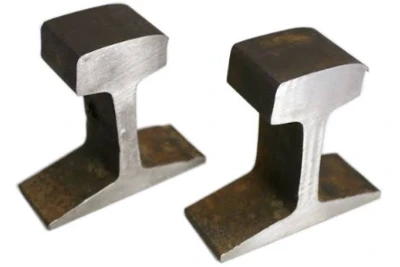
General structural steels such as Q235/Q345 are not suitable for rail service. Chemistry is certified per heat, with tight control of phosphorus and sulfur.
2. Geometric Parameters
The cross-sectional profile of standard rails must match the designated section - UIC60, GB 60 (60 kg/m), GB 50 or other specified profiles - with profile errors on the rail-head running surface controlled within about 0.3 mm.
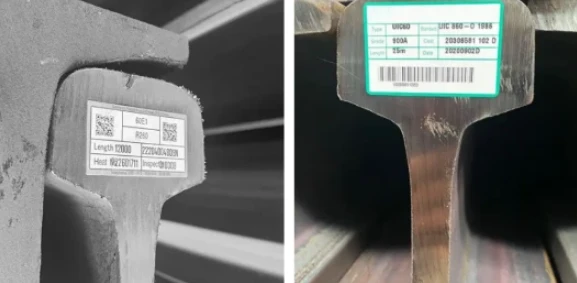
Standard lengths are typically 12.5 m, 25 m or 50 m (100 m long rails are special orders or welded lengths), with length tolerances per the standard and strict straightness and twist limits to ensure joint and welding quality.
3. Mechanical Property Requirements
Hardness: rail-head Brinell hardness should be stable in the range of about 300–350 HBW for standard pearlitic grades; hardened-layer depth at the head (where heat-treated or alloyed rails are specified) is typically not less than 8 mm below the running surface.
Low-temperature toughness: impact energy should meet the grade requirement - commonly at least 32 J at -20 °C for main-line grades - to resist brittle fracture in cold climates.
Tensile and fatigue: rails must meet the minimum tensile strength and fatigue endurance of the specified grade, verified by testing per the standard.
4. Production Process Control

Precise forming is carried out on a universal rolling mill; the finishing rolling temperature is controlled within about 850 ± 50 °C to develop a fine, uniform pearlite structure. After rolling, rails undergo controlled slow cooling (or head-hardening treatment where specified) to eliminate internal stresses and hydrogen-related defects, followed by full-length ultrasonic inspection for internal soundness.
5. Surface Quality Acceptance
Scratches deeper than 0.5 mm are not permitted on the working surface of the rail head, and no visible rolling defects are allowed on the rail bottom. Magnetic-particle inspection of the full section confirms freedom from crack-like defects, especially in the head and web transition zones, before rails are straightened, drilled (for jointed track) and dispatched.
6. Why It Matters
Only rails that meet the above technical requirements can guarantee stable performance under heavy-load and high-speed operation, and provide a reliable foundation for the railway transport system. For procurement, request the mill test certificate (chemistry, mechanical results, hardness and inspection records) and, where required by the project, arrange independent third-party inspection and certification of the rails.
Get a Quote for Railway Rails
Railway rail quality is determined by steel chemistry, profile geometry, hardness, mechanical properties, and inspection results, with requirements varying by the applicable standard and rail grade. GNEE RAILWAY RAILWAYL supplies railway rails with dimensional inspection, mechanical testing, material certification, and quality documentation to support railway and industrial track projects.


