

1. Advanced Materials
To achieve lighter and stronger performance, high-performance composites and high-strength alloys are gradually replacing traditional materials in fastener production. Beyond conventional rubber rail pads, modern track systems increasingly use EVA, HDPE and high-density polyurethane pads, which offer excellent durability and resilience under heavy loads, better vibration damping and longer service life in demanding conditions.

- High-strength alloys: improved fatigue resistance for clips, bolts and spikes under heavy axle loads.
- Polymer pads: polyurethane rail pads provide superior damping and wear resistance compared with standard rubber, protecting sleepers and ballast.
- Composite components: selected non-metallic parts reduce weight and corrosion in specific fastening elements.
2. Modular Design
Modular fastening systems are designed to adapt to various track conditions while significantly reducing installation time and cost. A complete modular system typically integrates rail clips, screw spikes, tie plates, bolts and nuts into one coordinated solution. The benefits:
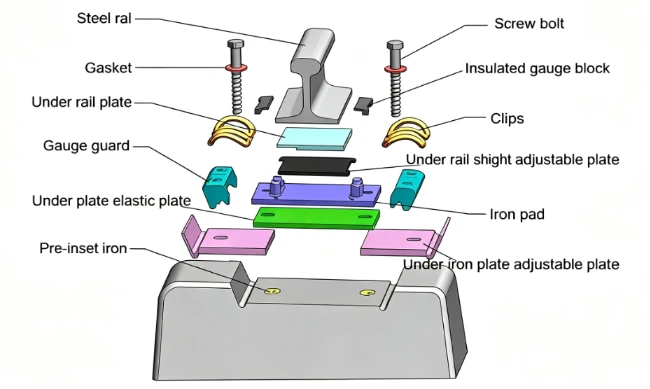
- Faster installation: pre-engineered components fit together without on-site adjustment.
- Standardized maintenance: fewer part types simplify spare-parts stock and replacement.
- Lower lifecycle cost: consistent clamping force reduces rail wear, maintenance frequency and energy consumption.
- Flexibility: the same system family serves high-speed lines, urban rail and heavy-haul freight with minor component variants.
3. Recyclability and Green Manufacturing
GNEE RAILWAY RAILWAYL are aligning with global environmental standards by developing recyclable products and optimizing production processes to reduce carbon emissions:
- Recyclable materials: steel fasteners are fully recyclable at end of life; pad materials are selected for recyclability where possible.
- Energy-efficient production: heat-treatment and surface-treatment processes are being optimized to cut energy and waste.
- Lifecycle thinking: longer-lasting fasteners mean fewer replacements, lower material demand and reduced track possession time for maintenance.
Railway fasteners remain a critical component of the track system, directly impacting operational efficiency and safety. The combination of advanced materials, modular engineering and green manufacturing is driving the next generation of fastening systems for high-speed, urban and heavy-haul railways.
Request Fastener Specifications & Pricing
Railway fasteners are developing toward higher strength, better fatigue resistance, improved corrosion protection, and more efficient installation. Selecting the right fastening system according to track conditions and performance requirements is essential for long-term track stability. GNEE RAILWAY RAILWAYL supplies railway fasteners and fastening systems for different rail profiles and track applications.


