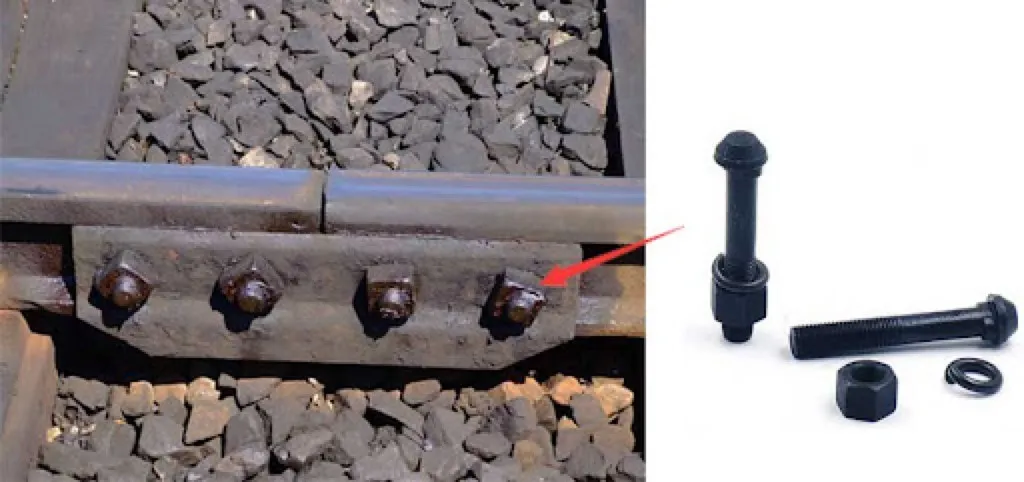
Fish bolts in railway are an indispensable and important component in the railway track system. Their main function is to connect the rails to the sleepers to ensure the stability and safety of the railway. Choosing the right material and type of connection bolts is of great significance to the operation safety and maintenance cost of the railway.
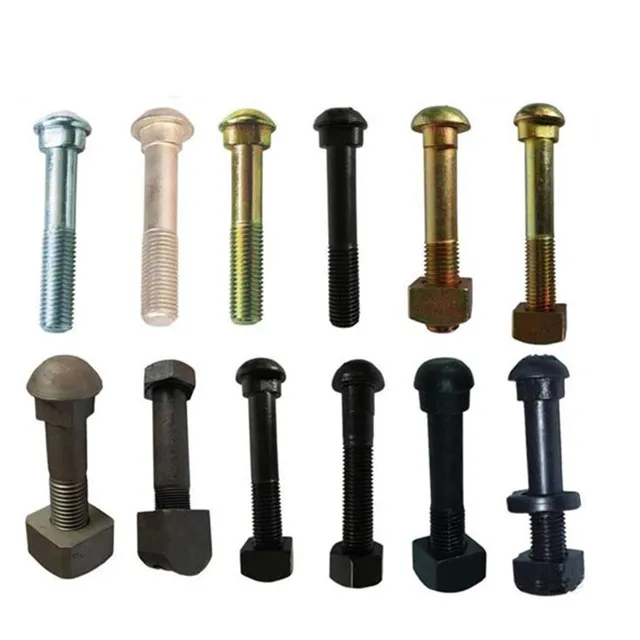
When selecting rail connection bolts, multiple factors need to be considered to ensure that they are suitable for specific application scenarios.
1. Load requirements:
When selecting bolts, the first thing to consider is the load to be borne. Different railway lines have different strength requirements for connection bolts. Generally, freight trains have higher requirements for bolts than passenger trains. Understanding the specific load conditions is a high-quality step in choosing suitable bolts.
2. Environmental conditions:
The environment in which the bolts are used is also a key factor. In humid or highly corrosive environments, stainless steel or specially treated alloy steel bolts should be preferred to improve their corrosion resistance. In dry environments with small temperature changes, carbon steel or alloy steel bolts are a more economical choice.
3. Installation method:
The installation method of rail connection bolts will also affect the selection. For bolts that need to be frequently disassembled and replaced, it is recommended to choose a design that is easy to install and disassemble. Considering the convenience of maintenance, the structure and shape of the bolts also need to comply with relevant standards.
4. Cost factor:
Under the premise of ensuring safety performance, cost is also an important consideration. Under the same performance, choosing cost-effective materials and types can effectively reduce the maintenance cost of railway operations.