


What are the primary applications of R65 railway rails?
The primary application of R65 railway rails centers on high-volume, heavy-haul transit networks and critical industrial transport corridors where infrastructure must withstand intense mechanical stress and high axle loads. As the structural foundation of the Russian standard rail system and broad-gauge networks across the CIS and Baltic regions, this heavy-duty railway rail profile is specifically engineered for environments where track downtime must be minimized. Its robust cross-section features a 64.88 kg/m mass distribution that efficiently absorbs high kinetic energy, making it the preferred choice for lines handling combined annual traffic volumes exceeding tens of millions of gross tons.
To ensure long-term structural integrity and operational safety across diverse transit networks, this profile is implemented across several demanding sectors:

- Heavy-Haul Freight Mainlines: Universally deployed along extensive resource corridors to support bulk freight trains transporting minerals, coal, and petroleum with axle loads regularly exceeding 25 to 30 tons.
- High-Volume Passenger Corridors: Utilized on mixed-traffic trunk lines operating passenger trains at speeds up to 160 km/h, where the rail's high moment of inertia minimizes vertical deflection and maintains passenger comfort.
- Industrial Logistics and Port Networks: Positioned within intermodal marine terminals, steel mills, and petrochemical facilities to handle heavy switching locomotives and continuous low-speed cyclic loading.
GNEE RAILWAY RAILWAYL's modern manufacturing lines ensure strict adherence to the geometric and metallurgical criteria of the Russian GOST P51685 standard, incorporating full-length ultrasonic defect detection to eliminate risk factors before shipment. By providing complete material traceability, precise engineering documentation, and specialized anti-corrosion packaging for maritime transit, we deliver reliable track components that significantly reduce long-term maintenance overhead for major international railway developers.
Why choose RAIL R65?
Choosing the R65 (P65) rail profile is a strategic decision for networks that demand maximum load capacity, structural resilience, and long-term asset lifecycle value. When evaluating track components for heavy-haul freight, industrial corridors, or high-density transit, the R65 profile serves as the standard for high-stress environments.
The core reasons to select the R65 profile include:
Engineered for Heavy Axle Loads
The primary reason to specify R65 rail is its ability to handle extreme vertical loads without structural failure.

- High Load Capacity: With a linear mass of 64.72 kg/m, the profile is specifically engineered to support axle loads of 25 to 30+ tonnes.
- Bending Rigidity: The 180 mm profile height delivers a massive vertical moment of inertia. This rigidity limits the elastic deflection wave under heavy rolling stock, preserving the integrity of the track geometry and reducing train rolling resistance.
Maximum Longevity and Wear Volume
The geometry of the R65 rail head provides a substantial volume of "sacrificial" steel, making it highly cost-effective over its lifespan.
- Extended Wear Limits: The 75 mm wide head can withstand significant vertical and lateral side-wear before reaching retirement thresholds.
- Maintenance Headroom: The deep head structure allows for numerous reprofiling and grinding cycles to eliminate rolling contact fatigue (RCF), corrugation, and micro-cracks, delaying expensive rail replacement cycles.
Robust Web and Base Geometry
The physical dimensions of the R65 profile are balanced to prevent common structural rail failures.
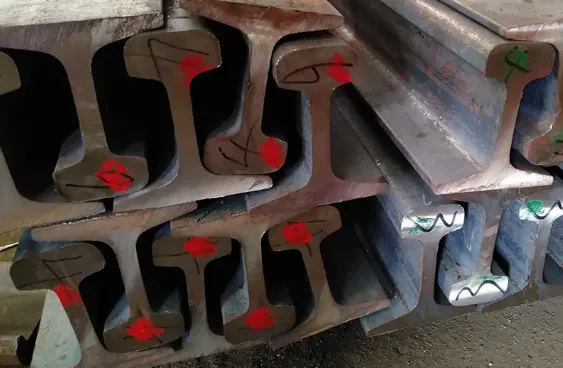
- Crack Resistance: The 18 mm web thickness, paired with generous fillet radii transitions to the head and base, minimizes stress concentrations. This design effectively resists longitudinal web cracking and vertical web buckling under heavy impacts.
- Substructure Protection: The 150 mm wide base distributes heavy wheel loads over a broad surface area on the tie plates and sleepers. This low pressure footprint prevents the rail from cutting into the sleepers and retards ballast pulverization.
FAQ
Why is the R65 steel rail chosen for cold-climate heavy freight applications?
The high-carbon steel grades used in the Russian GOST R51685 standard contain specialized micro-alloys that retain excellent impact toughness even at temperatures as low as -60°C, preventing brittle fractures in sub-zero freight operations.
Can the transport rail R65 profile be installed on concrete sleepers with elastic clips?
Yes, it is highly compatible with modern elastic fastening assemblies. When paired with the correct tie plates and rubber pads, it forms an exceptionally stable track structure that maintains strict gauge control under severe lateral forces.
What makes the 65 kg/m heavy rail suitable for heavy-haul mining networks?
Its broad 150 mm base width and 18 mm web thickness distribute massive vertical wheel loads over a wider surface area. This reduces localized structural fatigue and prevents the rail from tilting or warping under 30-ton axle configurations.
Are custom-drilled bolt configurations available for R65 rail fish plates?
Yes, while standard configurations feature traditional 4-hole or 6-hole drilling patterns according to Russian standard rails, the web can be precisely machined with custom bolt hole diameters and spacing to meet unique regional engineering blueprints.
How does head-hardening affect the lifecycle of R65 railway rails in transit lines?
Head-hardening elevates the surface hardness to a range of 341–401 HBW, which deepens the wear layer of the rail head. This modification significantly reduces the rate of side-wear on sharp curves and delays the onset of rolling contact fatigue.
Is the GOST Standard Rail R65 used in municipal metro or underground transit lines?
Yes, urban metro networks experiencing dense traffic schedules install this profile on heavy-use lines to increase the intervals between grinding maintenance, thereby maximizing operational window times and reducing lifetime costs.
Get a Quote in 24 Hours
Contact GNEE RAILWAY RAILWAYL to obtain complete technical drawings, detailed material specification sheets, and tailored logistics options for your project. Our technical team is prepared to deliver precise compliance certifications, detailed cross-sectional analysis, and comprehensive commercial proposals aligned with international shipping protocols. Contact us to receive an engineered track solution optimized for your specific axle load and environmental conditions.


