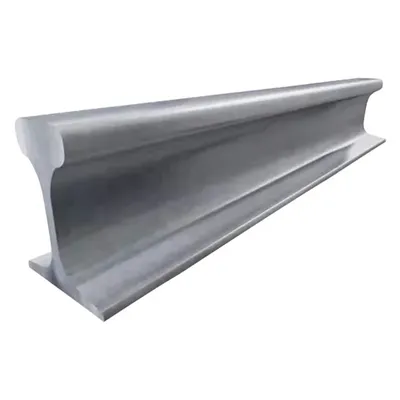
In the railway track structure, a Rail Anchor (also known as a rail creep anchor or tie anchor) is a crucial fastening component designed to prevent the longitudinal movement of rails (rail creep). During long-term operation, rails are subjected to temperature variations, braking forces, gradients, and train frequency, which can cause creeping-a gradual shifting of the rail along the track. This displacement can lead to gauge deviation, loosening of fasteners, sleeper wear, and even structural instability of the track. The primary purpose of installing a Rail Anchor is to stabilize the rail position, extend the service life of sleepers and fastening systems, and ensure safe and smooth train operation.

Why are rail anchors used in railways
Firstly, the Rail Anchor mechanically locks the rail to prevent longitudinal movement. It is installed beneath the rail base and bears tightly against the tie face. When the train wheel passes, the Rail Anchor uses elastic force and friction to resist any minor rail slippage. According to EN 13481 and AREMA standards, a properly configured Rail Anchor system can reduce longitudinal displacement by more than 80% and minimize sleeper wear by approximately 40%.

Secondly, the Rail Anchor effectively reduces cutting and abrasion of the sleeper. Rail creep increases friction between the rail base and sleeper, causing localized stress on wooden or concrete ties. The Rail Anchor increases the bearing contact area, preventing the rail from cutting into the sleeper surface and maintaining the sleeper's structural integrity, thereby prolonging the overall service life of the track system.

Moreover, in sections with steep gradients, significant temperature differences, or frequent braking and acceleration, Rail Anchors are indispensable. They are particularly required on open-deck bridges, rail crossings, and heavy-load tracks, where typically more than 8 Rail Anchors per 39-foot rail are installed to ensure maximum stability and safety.

According to GNEE RAILWAY RAILWAYL's production standards, Rail Anchors are manufactured from 60Si2MnA spring steel or QT500-7 ductile cast iron, suitable for various rail profiles such as 50Kg, 85Kg, 90/91LB, 115RE, 136RE, UIC54, and UIC60. Surface treatments include zinc plating, hot-dip galvanizing, or epoxy coating, ensuring excellent strength and corrosion resistance even in humid, saline, or freeze-thaw environments.
Rail anchors specifications

| Type | Used in 50Kg, 85Kg,90/91LB, 115RE /136RE ,UIC54 & UIC60 rail, or other types upon customers' drawings. | ||
| Material | 60Si2MnA | 45# | QT500-7 |
| Chemical composition(%) | C:0.56-0.64, Mn:0.60-0.90, Si:1.60-2.00, Cr:≤0.35, P:≤0.03, S:≤0.03 | C:0.42-0.50, Mn:0.50-0.80, Si:0.17-0.37, Cr:≤0.25, P:≤0.035, S:≤0.035 | C:3.60-3.80, Mn:≤0.6, Si:2.50-2.90, P:≤0.08, S:≤0.025 |
| Surface | plain (oiled),color painting, zinc painted or HDG | ||
| Standard | AS1085.10-20002 , DIN, ISO-9001 | ||
GNEE RAILWAY RAILWAYL not only supplies high-quality Rail Anchors but also provides a full range of rail fastening products, including Rail Clip, Fish Plate, Rail Pad, Gauge Block, Tie Plate, and Rail Spike. Additionally, GNEE RAILWAY RAILWAYL offers rail anchor layout design, installation technical guidance, and anti-corrosion solution optimization, guaranteeing reliable, stable, and efficient track performance under complex operating conditions.