Analysis of the use, material and type of rails
1. The main use of rails
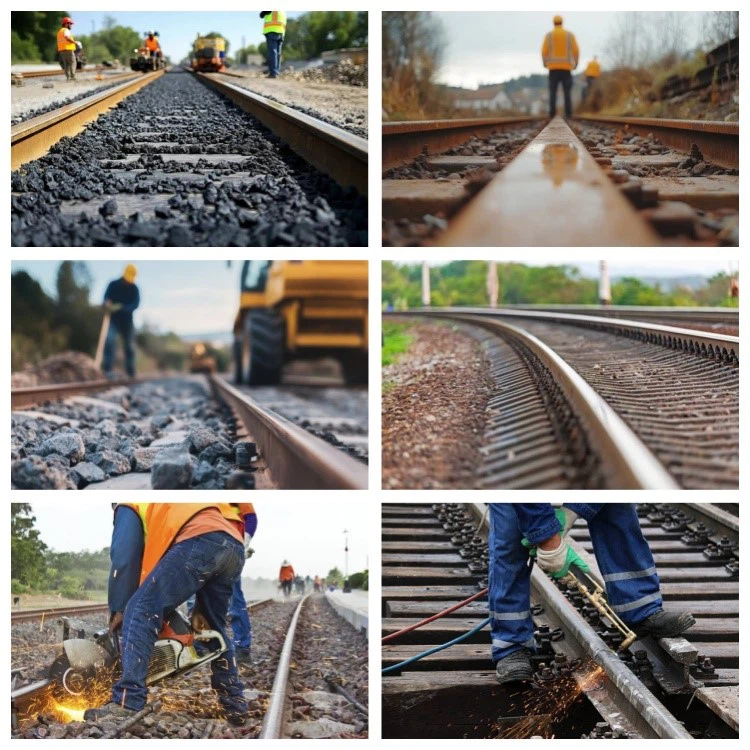
Rail is the basic component of railway transportation, mainly used for laying railway tracks, bearing and guiding the operation of trains and their loads. In the railway transportation system, the rail directly bears the huge pressure of the train wheels, and is connected to the sleepers or track plates through elastic fasteners to disperse the pressure to the roadbed or bridge. At the same time, the geometric size, shape and material of the rail have a vital impact on the smoothness and safety of train operation.
2. Analysis of the material of rails
The rails are mainly made of high-carbon micro-manganese steel. This steel has high strength, high hardness and good wear resistance, and can withstand long-term friction and impact of train wheels. At the same time, high-carbon micro-manganese steel also has good toughness and fatigue resistance, and can maintain stable performance under complex natural environmental conditions and train loads. These characteristics make high-carbon micro-manganese steel an ideal rail material.

3. Different types of rails and their applicable scenarios
(1). Heavy rails: Mainly used for high-speed railways and heavy-load railways, capable of withstanding greater loads and higher operating speeds. Its material and manufacturing process requirements are more stringent to ensure the safety and stability of train operation.
(2). Light rails: Mainly used in urban rail transit and light railway systems. Although the load and speed it bears are relatively low, light rails have obvious advantages in manufacturing cost, installation convenience and environmental performance.
(3). Special rails: For specific operating environments and usage requirements, such as steep mountainous areas, high temperature or extremely cold areas, special rails use special materials and manufacturing processes to meet special performance requirements. For example, heat-resistant rails can maintain stable performance in high temperature environments, while cold-resistant rails can resist the risk of low-temperature brittle fracture in extremely cold areas.
In short, as the core component of the railway transportation system, the use, material and type of rails have an important impact on the safety, efficiency and economic benefits of railway transportation. With the continuous advancement of science and technology and the growing demand for railway transportation, the manufacturing technology and application fields of rails will continue to expand and innovate.