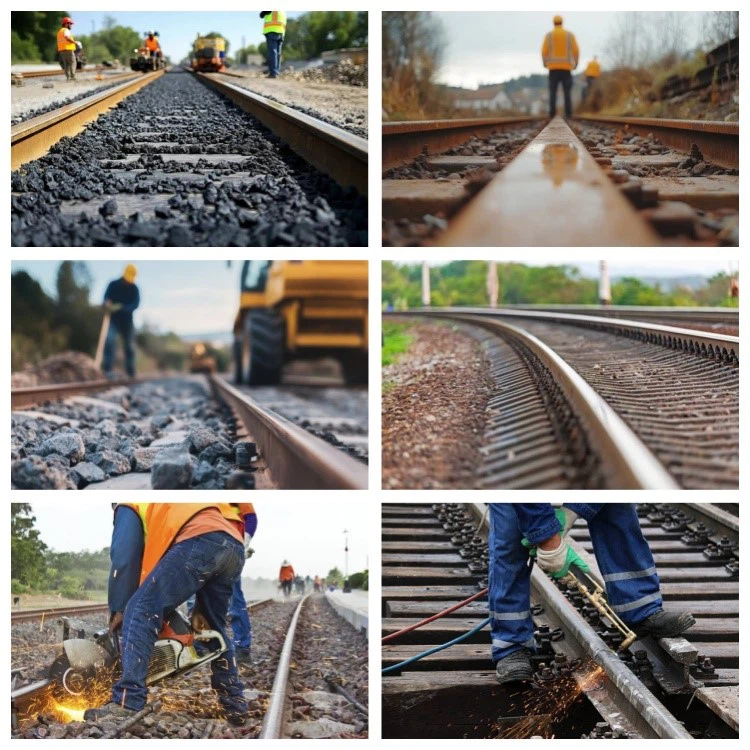
Functions and roles of rails
In the long history of railway development, rails, as key components that carry the weight of trains, have always played an indispensable role. From early wooden rails to modern high-strength rails, the innovation of materials and technology has continuously promoted the progress of the railway industry.
Rails, as the core component of the track structure, play a vital role. It is not only responsible for guiding the direction of the wheels, but also bears and transmits the load of the wheels. More importantly, rails provide a continuous and smooth rolling surface for the wheels, thus ensuring that the vehicle can move forward smoothly and unimpeded.
In addition, rails also play an important role in the conduction of electrical signals. In sections of electrified railways or automatic blockages, rails are cleverly used as part of the track circuit. This design realizes automatic and continuous detection of line occupancy. At the same time, it is also responsible for controlling signal devices and switch devices, thereby ensuring the safety and efficiency of driving.

As the core component of railway transportation, the characteristics of rails directly affect the efficiency and safety of train travel. Therefore, the requirements for rails must be comprehensive and strict, covering their cross-sectional shape, size, and performance stability under high-speed and heavy-load environments.
As an important part of the railway line, the maintenance and care of rails are crucial. Through reasonable maintenance and repair technology, the durability of rails can be ensured, thereby ensuring the safety and smoothness of railway lines.
1. Use fixed-length rails and lay seamless lines
2. Scientifically select suitable rail materials and strength grades according to the needs of different lines
3. Rail profile optimization measures
4. Maintain its profile through reasonable grinding of rails
5. Scientific lubrication is essential
Through these measures, the service life of rails can be effectively extended, safety can be improved, and maintenance costs can be optimized, thereby achieving more efficient railway transportation.