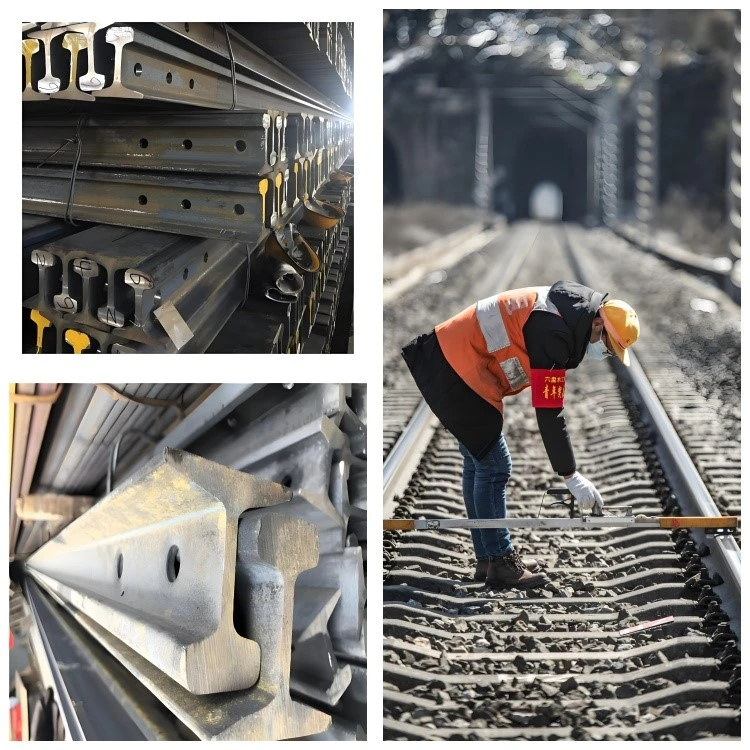
Light rail models
1. 8kg/m light rail
8kg/m light rail is the lightest rail in the railway industry, so it is also called "ultra-light rail". Its cross-sectional shape is "convex", which has the characteristics of high flexibility and plasticity, and is suitable for narrow-gauge railways, light rail railways, and internal lines of mines.
2. 12kg/m light rail
12kg/m light rail is the most commonly used rail in the railway industry. It is widely used and is suitable for narrow-gauge railways or light railways in different fields such as industrial and mining enterprises, agriculture, and forestry. The cross-sectional shape of this rail is "convex", which is similar to the 8kg/m light rail, but the size is larger.
3. 15kg/m light rail
15kg/m light rail is a heavier type in the railway industry, so it has higher strength and load-bearing capacity. It is suitable for use in railway scenes with medium loads, such as mines and docks. The cross-sectional shape of this rail is "convex" shaped, and the size is larger than the 12kg/m model.
4. 18kg/m light rail
18kg/m light rail is a medium-to-heavy rail steel material, suitable for transportation tools such as light rail and trams with high bearing
capacity requirements. The cross-sectional shape of this rail is a "double-headed T" shape, which has good durability and bearing capacity.
5. 22kg/m light rail
22kg/m light rail is a steel material used for medium-sized rail transportation, and its application scenarios include urban light rail and internal mine lines. The cross-sectional shape of this rail is a "double-headed T" shape, which is heavier than the 18kg/m rail and has a stronger bearing capacity.
In general, there are many types and application scenarios of light rails. Choosing the right rail model can effectively improve the efficiency and safety of railway transportation.