

Tracks, as critical components of railway lines, constitute an integrated engineering structure comprising major elements such as rails, sleepers, fastening components, ballast beds, anti-creep devices, and turnouts.
Standard rail lengths are typically 12.5m and 25m. Rails are rolled steel bars with an I-shaped cross-section used for track laying, also called tracks. Track length depends on multiple factors, including track type (e.g., welded seamless tracks exceeding 200m), temperature, and material properties. Beyond supplying standard-length rails, GNEE RAILWAY RAILWAYL operates its own factory to provide custom-length heavy rails, light rails, and crane rails per client specifications.

Advantages of using long fixed-length rails:
01 Reduced rail joint quantity
Increasing rail lengths decrease track joints, enhance smoothness, and improve passenger comfort. Simultaneously, they significantly reduce rail welding workloads and track maintenance requirements.
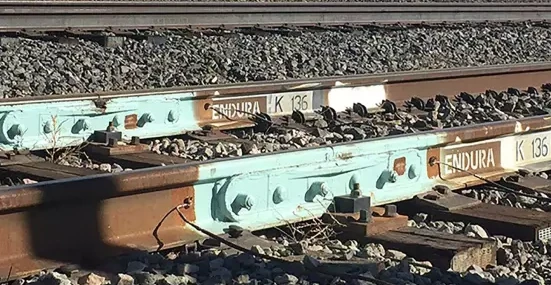
02 Elimination of inspection and straightening blind zones
Producing rails as long fixed-length sections (≥103m before straightening) allows removal of 0.5–1.5m sections from both ends after straightening and inspection. This completely eliminates inspection blind zones and straightening blind zones, substantially improving rail end quality.


