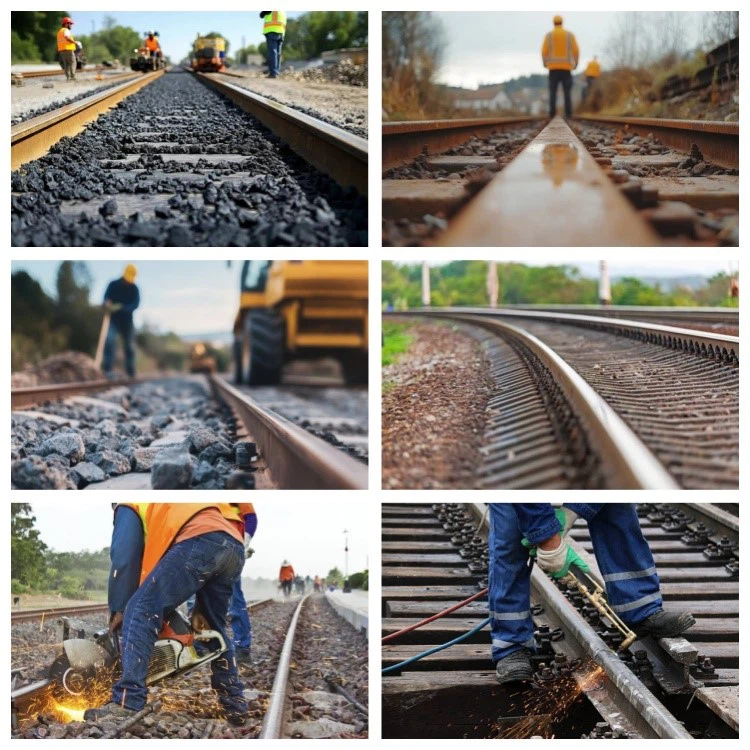
Why do rails prefer rust to stainless steel?
Railway is the backbone of modern transportation, supporting trains that carry passengers and freight over long distances. The choice of rail material is critical to ensure safety, efficiency and longevity. Some may wonder why rails are made of rusted iron, commonly referred to as "weathering steel" or "corten steel", rather than stainless steel, which is known for its corrosion resistance.
Weathering steel, also known as COR-TEN steel (from the corrosion resistance and tensile strength), is a low-alloy steel specially designed to form a protective layer when exposed to atmospheric conditions. Its main alloying elements include copper, nickel, chromium and phosphorus.
The notable feature of weathering steel is its ability to self-protect from corrosion by forming a stable and adherent rust layer, which is called "patina". It acts as a barrier to prevent further corrosion and degradation of the steel below. The patina is very beautiful and gives weathering steel its typical rusty appearance.

Despite its rusty appearance, weathering steel is highly corrosion-resistant. The patina formed on the surface acts as a protective barrier against atmospheric corrosion, making it very suitable for outdoor applications, including railway tracks.
Weathering steel requires minimal maintenance compared to stainless steel, which is susceptible to pitting and crevice corrosion over time. The self-protecting properties of weathering steel reduce the need for costly and labor-intensive maintenance work.
Weathering steel is more cost-effective than stainless steel, making it an attractive option for large rail infrastructure projects. The lower initial cost, combined with reduced maintenance expenses, makes it an economically viable choice.
The tensile strength of weathering steel is comparable to that of traditional carbon steel used in rail tracks, ensuring the structural integrity and safety of rail infrastructure. One of the most notable features of weathering steel is its rusty appearance.
Stainless steel is expensive and less cost-effective for large rail projects. In addition, the high strength and hardness of stainless steel will increase wear on train wheels, leading to increased long-term maintenance costs.
In contrast, weathering steel offers a balance of corrosion resistance, cost-effectiveness and strength, making it well suited for outdoor applications such as rail tracks. Weathering steel has demonstrated its performance and durability in various rail projects around the world.