


↵Rail Shoulder Fastening System

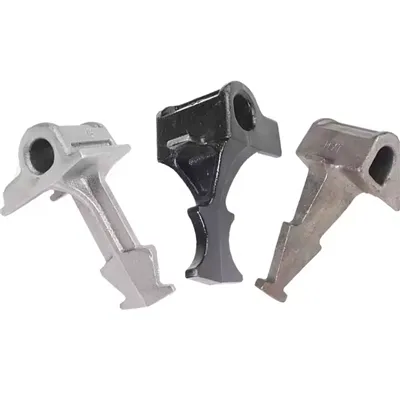
The Railway Shoulder is a fundamental structural component in rail fastening systems, serving as the rigid abutment that transfers lateral forces from the elastic rail clip to the sleeper. Designed as either an integrated cast feature of concrete sleepers or as separate malleable iron/steel inserts, it provides the essential reaction point against which clips exert their clamping force to secure the rail.
Technical Specifications:
| Characteristic | Specification / Detail | Primary Importance |
|---|---|---|
| Primary Structural Role | Transfers Lateral Forces from Clip to Sleeper | Fundamental to Gauge Retention & Track Stability |
| Critical Wear Parameter | Gauge Face Wear Depth (typically limited to 2-3mm) | Directly Correlates with Clamping Force Loss |
| Material Optimization | Wear-Resistant Surface with Tough Core | Balances Abrasion Resistance & Fracture Toughness |
| System Compatibility | Geometrically Matched to Specific Clip Type | Ensures Correct Force Vector & Clip Performance |
| Failure Consequence | Progressive Gauge Widening & Asymmetric Rail Loading | Leads to Rapid Track Geometry Deterioration |

Functional & Engineering Perspective
Clip Reaction and Force Vector Control: The shoulder's contact surface geometry determines the clip's deflection path, directly influencing the vertical-to-horizontal force ratio applied to the rail foot.
Rail Cant and Alignment Definition: Many shoulders incorporate an angled or stepped profile that establishes and maintains the correct rail inclination (typically 1:20 or 1:40), crucial for optimal wheel-rail contact and wear distribution.
Wear Surface for Clip Engagement: Provides a durable, hardened surface against which the clip bears and flexes during dynamic loading, designed to withstand abrasion over millions of load cycles.
Maintenance & Operational Perspective
- Critical Surface Hardening: The gauge face and clip contact areas undergo selective heat treatment (induction hardening or flame hardening) to achieve surface hardness of 45-55 HRC, providing wear resistance while maintaining a tough core.
- Dimensional Precision Machining: After casting/forging, critical interfaces-gauge face, clip seating surfaces, and base contact-are machined to tight tolerances (±0.2mm typically) to ensure consistent performance.
- Corrosion Protection for Metal Shoulders: Receives multi-layer protection: zinc phosphate coating for corrosion resistance and paint adhesion, followed by epoxy or polyester powder coating.
Gnee Professional supplier


Hot Tags: customized railway shoulders, China customized railway shoulders manufacturers, suppliers, factory, single shoulder tie plate, elastic rail clips, rubber pad material, Tie Plate, types of rail anchors, oval neck track bolts


