


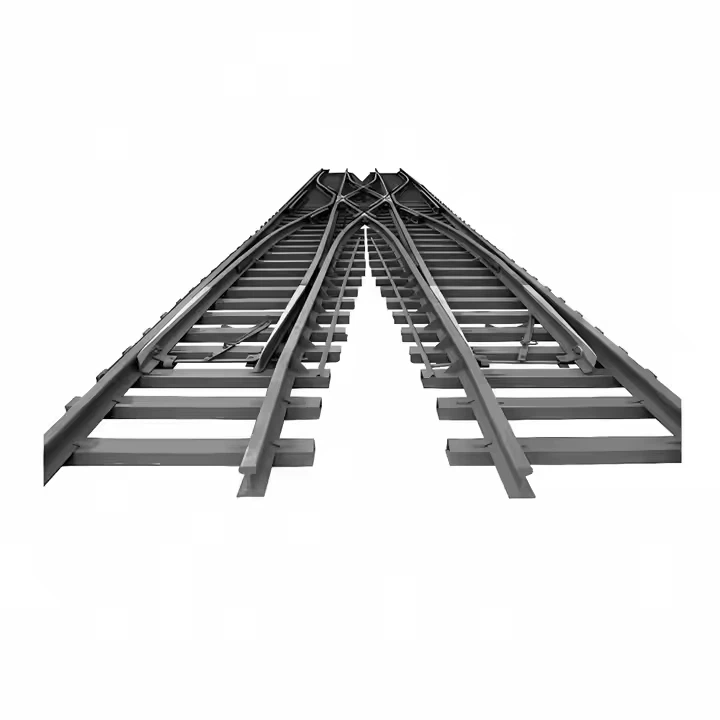
Railway Turnout Components Specification
| Component Name (English) | Description & Primary Function | Key Characteristics |
|---|---|---|
| 1. Switch Panel / Points | The section where the route is changed. It consists of the moving parts that guide the wheels. | |
| Stock Rails | The fixed, full-length outer rails against which the switch rails move. | Provides a continuous running surface for the non-diverging route. |
| Switch Rails / Tongue Rails | The tapered, movable rails that are shifted to guide the wheels onto the straight or diverging route. | Made from standard rail section, machined to a fine taper at the toe. |
| Toe (of Switch) | The end of the switch rails where they are connected to the throwbar and actuation mechanism. | The point of movement. |
| Heel (of Switch) | The end of the switch rails where they are fixed to the sleepers and hinge. | Allows the rail to pivot. |

Key Concepts:
Through Route (Main Route): The straight path through the turnout.
Diverging Route (Branch Route): The path that curves away from the main route. The frog number determines the speed limit on this route.
Frog Types:
Fixed Frog: Common type, solid manganese steel casting. Requires wheels to "jump" a gap.
Spring Frog / Movable Point Frog: The nose of the frog can move to provide a continuous running surface for the through route, allowing higher speeds. Used in high-speed turnouts.
Switch Types:
Stub Switch: An outdated design where the entire rail is moved.
Split Switch / Hinged Switch: The modern standard, as described in the table.

gnee-professional supplier


Hot Tags: rails turnout, China rails turnout manufacturers, suppliers, factory, railway turnout fittings, railroad switch frog, railway turnout global market, switch customer needs, switch lead time, turnout plates


