


What are the characteristics of European S18 Light Rail?
The European DIN S18 light rail is manufactured in strict compliance with the German standard DIN 5901. It is a specialized industrial profile engineered specifically to bridge the performance gap between ultra-light ground tracking and heavier freight rail systems.
1. Standard Geometric Parameters
The cross-section of the S18 profile is characterized by a high, narrow head relative to its base width, which distributes concentrated wheel loads down into the supporting track foundation efficiently.
- Theoretical Weight: 18.30 kg/m (often rounded to 18.20 kg/m in structural billing)
- Rail Height (H): 93.0 mm ArcelorMittal
- Base Width (B): 82.0 mm Wirth Rail
- Head Width (C): 43.0 mm Wirth Rail
- Web Thickness (t): 10.0 mm glorytrack.com
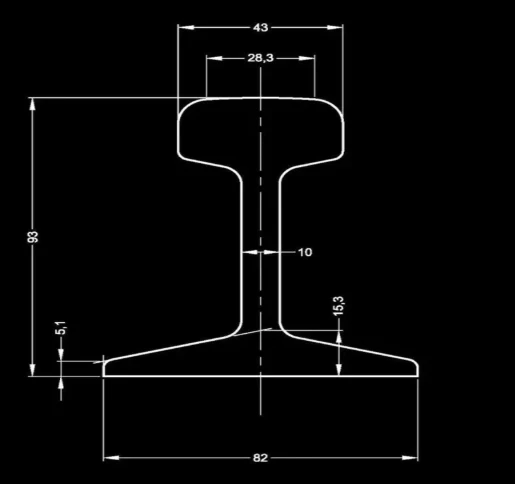
| Height: 93 mm | Base Width: 82 mm |
| Head Width: 43 mm | Web Thickness: 10 mm |
| Length: 6m-10m | Material: Q235/55Q |
| Weight: 18.3 kg/m | Standard: DIN 5901 |
2. High Structural Stiffness (Web-to-Weight Ratio)
One of the most notable engineering characteristics of the S18 rail is its 10.0 mm web thickness. Crane rail supplier
- Lateral Resistance: This 10mm thickness is identical to heavier light rail profiles like the DIN S20 and DIN S24.
- Buckling Resistance: By keeping a robust web while narrowing the head and base, the profile minimizes dead weight without sacrificing lateral stiffness, making it resistant to fish-tailing and web buckling under shifting or non-vertical wheel loads.
3. Dual-Grade Material Adaptability
Depending on the track's operational velocity, frequency, and load spectrum, the S18 rail is rolled in two primary metallurgical profiles:
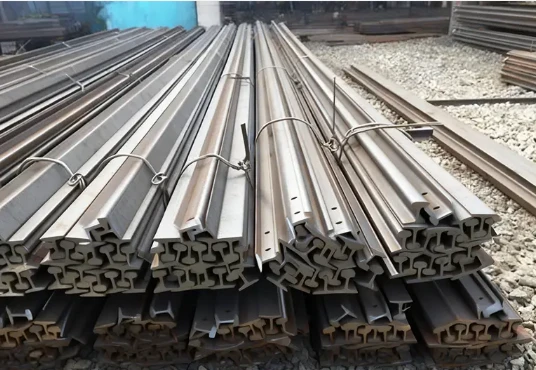
-R200 (Low-Carbon / Structural Grade): Offers superior ductility, ease of cold bending for radius curves, and clean weldability. It is primarily specified for indoor, climate-controlled environments or lower-frequency industrial loops where cost minimization is a priority. Crane rail supplier
-R260 (High-Carbon / Wear-Resistant Grade): Features significantly higher tensile strength (≥ 685–880 MPa) and elevated Brinell hardness. This grade is deployed in high-cycle automated storage and retrieval systems (ASRS) or abrasive mining paths to mitigate plastic deformation and head wear.
What are the advantages of S18 light rails compared to DIN A series crane rails?
The choice between DIN S18 light rails (under the DIN 5901 standard) and DIN A series crane rails (such as A45, A55, A65 or A75 under the DIN 536 standard) represents a fundamental choice between two different structural engineering designs.
While DIN A series rails are designed for heavy-duty, high-tonnage crane applications, the S18 light rail provides distinct advantages in terms of material efficiency, installation flexibility, and overall cost optimization for light-to-medium industrial tracks.
1. Structural Mass and Material Cost Efficiency
The primary advantage of the S18 profile is its efficient distribution of mass, which results in significant weight and cost savings compared to even the smallest DIN A series profiles.
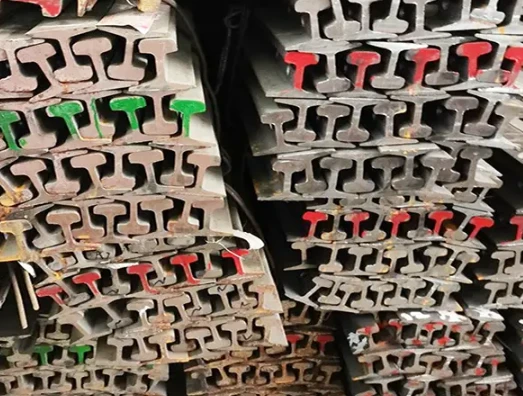
- Weight Comparison: The DIN S18 rail weighs 18.30 kg/m. In contrast, the smallest standard DIN A crane rail, the DIN A45, weighs 22.10 kg/m, despite having a much narrower head.
- Procurement Savings: Because steel is purchased by the metric ton, choosing the S18 over the A45 for a 2,000-meter total run saves 7.6 metric tons of steel. This represents an immediate ~17% reduction in raw material procurement costs without sacrificing linear track length.
2. Higher Profile Design for Superior Vertical Bending Resistance
The structural geometry of the two rail types is optimized for completely different support conditions.
- S18 Geometric Advantage: The S18 rail has a height of 93 mm, whereas the DIN A45 has a height of only 55 mm.
- Sleeper/Support Spacing: The taller profile of the S18 gives it a much higher moment of inertia against vertical bending. This allows the S18 to bridge gaps between discontinuous supports (like sleepers, ties, or mounting brackets spaced at 600–750 mm) without excessive deflection.
- The DIN A Limitation: DIN A series rails have a low-profile, squat design (e.g., the A45 is wider than it is tall). They have very little resistance to vertical bending on their own and must be continuously supported by a rigid steel girder or concrete bed along their entire length.

3.Lower Self-Weight for Elevated Runway Systems
In automated storage and retrieval systems (ASRS), light workshop cranes, or overhead material handling lines, the weight of the rail adds directly to the permanent dead load on the building's structural framework.
- Infrastructure Optimization: Using the 18.30 kg/m S18 rail instead of heavier crane rails reduces the dead load exerted on runway beams (I-beams or H-beams) and vertical columns.
- Downstream Savings: This lower dead load allows civil engineers to specify lighter structural steel framing and smaller concrete foundations, reducing overall facility construction costs.
4.Simplified Mechanical Jointing and Connection
Jointing methods for light rails are less complex and more cost-effective than those required for crane rails.

- Standard Fishplate Jointing: The S18 features a high web that accommodates standard bolted joint bars (fishplates). This allows for fast mechanical splicing using standard impact wrenches, making installation, track extensions, or section replacements straightforward.
- No Mandatory Welding: Because DIN A crane rails handle heavy, high-impact wheel loads, they typically require complex thermite welding or puddle welding at the joints, combined with heavy-duty weldable clips (e.g., Gantrail clips). The S18 eliminates these specialized welding labor and hardware costs for light industrial applications.
Get a Quote in 24 Hours
To optimize your track design and minimize material waste, contact GNEE RAILWAY RAILWAYL to receive comprehensive layout advice, certified mill material test data, and exact CAD blueprints. Our technical representatives are prepared to assist with determining optimal total shipping configurations and specific length cutting schedules tailored to your site boundaries. You can easily contact us to get a project quotation, allowing your company to access custom manufacturing options and direct engineering resources that secure the long-term efficiency of your light rail systems.


