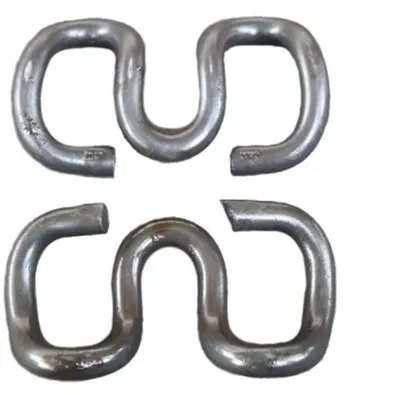
Rail elastic clips are small, hard steel parts, but they still need careful packaging and shipping planning. A clip that is damaged by corrosion or by handling during transport cannot deliver its rated clamping force on site. This article explains how rail elastic clips are packaged and shipped so that they arrive in perfect condition.
Why Packaging Matters for Rail Clips
Elastic clips are spring-steel components with precise dimensions and a heat-treated surface. During export transport they face moisture, salt air, vibration and rough handling. The purpose of packaging is to protect the clips from corrosion and mechanical damage, to keep batches identifiable, and to make loading, unloading and on-site handling efficient. The packaging method is selected according to the quantity, the destination and the customer requirement.
Common Packaging Methods
Woven bags are the most common and economical packaging for rail clips, and they are suitable for container shipment of bulk quantities. Wooden boxes are used for more secure or long-distance transport and can be combined with plastic bags inside for additional moisture protection. Pallets are widely used: clips are placed on a pallet, sometimes in internal plastic bags, and the pallet may be covered or boxed for stability. Custom packaging is available to customer requirements, including the surface treatment specification.
Surface Treatment Before Packing
Before packing, clips undergo a surface treatment to match the customer requirement and the transport environment. Plain oiled clips are the standard economical option, oxide black gives a stable dark finish, and colour painting, zinc plating or hot-dip galvanizing give longer corrosion protection for humid destinations. The surface treatment is an important step in preparation for shipping, because it determines how long the clips stay rust-free in storage and during sea freight.
Quality Control Before Dispatch
Clips are inspected before they leave the factory to ensure quality and proper packaging. Dimensional checks, hardness testing and visual inspection confirm that the batch matches the order, and the packaging is checked for completeness and correct marking. Representative models and weights are listed below, which help with the loading calculation.
| Model | Wire diameter | Weight | Material |
|---|---|---|---|
| Type III | 18 mm | 0.80 kg/pc | 60Si2MnA |
| E1609 | 16 mm | 0.43 kg/pc | 60Si2MnA |
| E1809 | 18 mm | 0.61 kg/pc | 60Si2MnA |
| E1813 | 18 mm | 0.62 kg/pc | 60Si2MnA |
| E2009 | 20 mm | 0.80 kg/pc | 60Si2MnA |
| E2055 | 20 mm | 0.80 kg/pc | 60Si2MnA |
Shipping and Logistics
Packaged clips are transported by truck, by rail, or by a combination of both, depending on the destination, and transfers between modes take place at intermodal facilities. Bulk orders are normally shipped in containers, with the woven bags or boxes stowed on pallets to make loading and unloading fast and safe. For overseas projects, the shipment documents include the packing list, the certificate of origin and the material test certificate, so that the receiving party can verify the goods and clear customs without delay.
Frequently Asked Questions
What is the most common packaging for rail clips? Woven bags are the most common and economical packaging, and they are suitable for container shipment.
How are clips protected against rust during shipping? Clips are oiled, oxide blacked, painted, zinc plated or hot-dip galvanized before packing, and plastic bags may be used inside the outer packaging.
Can packaging be customized? Yes, packaging can be tailored to customer requirements, including woven bags, wooden boxes, pallets and specific surface treatments.
How are large orders shipped? Bulk orders are normally loaded into containers on pallets and transported by truck and ship, with intermodal transfer where needed.
What documents are supplied with the shipment? The shipment includes a packing list, certificate of origin and material test certificate so the goods can be verified and cleared.