


What is the height of the S18 light rail profile?
According to the European manufacturing standard DIN 5901, the nominal section height of the standard DIN S18 light rail is exactly 93.0 mm.In international steel procurement, technical bidding, and track alignment engineering, this specific 93.0 mm dimension governs manufacturing tolerances, structural load-bearing logic, and matching accessory specifications.
Dimensional Tolerances (Manufacturing Controls)
During the cold-straightening process on modern rolling mill production lines, steel shrinks and expands due to thermal variations, and rolling passes suffer gradual wear. Consequently, the profile height cannot be rolled to an absolute zero variance.
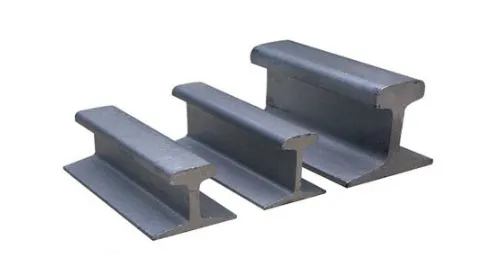
- Standard Height Tolerance: ± 0.5 mm
- Engineering Practice: The delivered height of a certified batch of S18 rails must fall strictly between 92.5 mm and 93.5 mm. Deviations outside this range create an uneven running surface, which generates severe wheel vertical impacts and tracking vibration at high rolling speeds.
Structural Advantages of the 93.0 mm Height
The height of a rail profile directly determines its Moment of Inertia (Ix) and Section Modulus (Wx), which are the core parameters for calculating a track's load capacity.
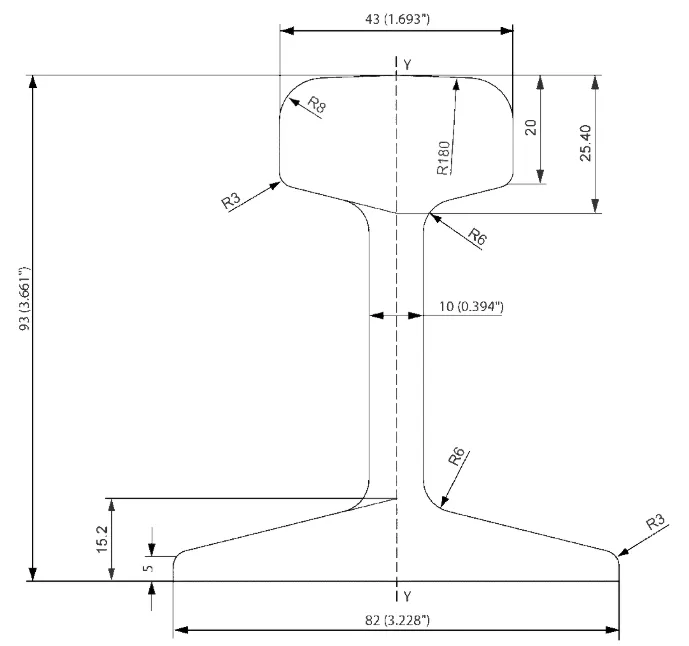
- Vertical Stiffness: The 93.0 mm height provides excellent vertical bending resistance. When laying underground mining tracks or automated storage corridors with a standard sleeper pitch (support spacing) of 500 mm to 600 mm, the 93.0 mm beam profile prevents permanent downward sagging under loaded cars (safely supporting axle loads up to 5.0 metric tons).
- Aspect Ratio Stability: With a height of 93.0 mm and a base width of 82.0 mm, the aspect ratio is approximately 1.13 : 1. This geometric ratio represents a classic roadway light rail design, maximizing vertical structural capacity while providing an adequate footprint area to resist lateral overturning forces.
Height Comparison: DIN S18 vs. Chinese GB 18KG
In international procurement, buyers often confuse the DIN S18 with the Chinese standard GB 18KG light rail. However, their heights are highly incompatible:
- The 3.0 mm Height Mismatch: The DIN S18 stands at 93.0 mm, whereas the GB 18KG stands at 90.0 mm. There is a 3.0 mm absolute height gap.
- The Joint Splicing Risk: Connecting these two rails directly creates a 3 mm step at the joint. When steel wheels pass over this ridge at speed, they generate massive dynamic impact loads. This rapidly shears fishplate bolts, chips the running wheel treads, and can cause vehicle derailment.
- Substitution Conditions: GB 18KG can only replace DIN S18 if the entire network is swapped out consistently, or if custom-machined compromise fishplates (step joints) are used to manually grind down and taper the 3.0 mm variance.
| Engineering Parameter | Chinese Standard: GB 18KG | European Standard: DIN S18 | Dimensional Variance / Mismatch |
| Governing Specification | GB/T 11264 | DIN 5901 | Non-identical manufacturing criteria. |
| Theoretical Mass (Weight) | 18.06 kg/m | 18.30 kg/m | +0.24 kg/m mass increase in the DIN profile. |
| Total Rail Height | 90.0 mm | 93.0 mm | +3.0 mm height gap. Cannot be directly spliced without step-joint bars. |
| Base Flange Width | 80.0 mm | 82.0 mm | +2.0 mm variance. Affects fixed-gauge fastening soleplates. |
| Head Width | 40.0 mm | 43.0 mm | +3.0 mm variance. Affects wheel flange clearance tolerances. |
| Web Thickness | 10.0 mm | 10.0 mm | 0.0 mm (Identical). Both share the same central web mass. |
| Head Depth | 22.0 mm | 20.0 mm | -2.0 mm variance in the head vertical block. |
| Base Flange Thickness | 7.0 mm | 7.5 mm | +0.5 mm variance at the outer edge of the rail foot. |
4. Accessory Matching Constraints Controlled by Height
Because the total height is fixed at 93.0 mm, the fishing height (the sloped web area beneath the rail head and above the rail foot) is also locked into an exact geometric curve.
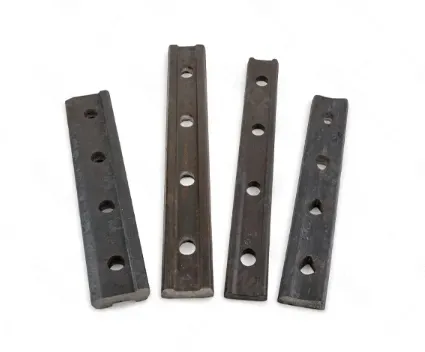
- Fishplate (Joint Bar) Fitment: Standard 4-hole DIN S18 fishplates are profiled to fit perfectly within the sloped contact zones dictated by the 93.0 mm height framework.
- Bolt-Hole Centerline Alignment: The horizontal centerline of the pre-drilled holes at the rail ends is calculated relative to the 93.0 mm vertical axis. Non-standard or cross-standard splice plates will have mismatched hole centerlines, rendering field assembly impossible.
FAQ
- What exact dimensional tolerances does your mill guarantee for the 43.00 mm head width and 93.00 mm height on S18 rails?
Our automated rolling lines maintain structural dimensional variations well within the strict limits allowed by the DIN 5901 standard. For critical tracking measurements like the 43.00 mm head width and 93.00 mm vertical height, our processing controls variations to a fraction of a millimeter, ensuring that your automated industrial guide wheels experience zero tracking friction or sudden gauge widening.
- Can your factory provide certified mill material test reports (MTR) demonstrating compliance with the 680–880 MPa tensile requirement?
Yes, every batch of S18 rails shipped from our facility is accompanied by official mill material test reports detailing the heat number, exact chemical composition (including carbon, manganese, and silicon levels), and destructive mechanical testing results. This transparent documentation confirms that the tensile capacity safely reaches the mandatory 680 to 880 MPa limit required for heavy material handling.
- We need custom length profiles like 5.8 meters to fit our existing mine cage dimensions; can you execute precision custom cuts?
Our finishing facility is equipped with high-speed cold saws that can cut standard stock rails down to any bespoke linear dimension required by your underground shafts or factory floor layouts. We handle these custom length requests with a rigid tolerance range of ±1 mm to ±2 mm, completely eliminating the need for expensive, time-consuming manual torch cutting on-site.
- How does your production process treat the pre-drilled fishplate holes to prevent structural cracking around the joint arrays?
To protect the 10.00 mm center web from failure under cyclic load stress, all joint bolt holes are drilled using specialized multi-spindle machinery and then carefully deburred to remove sharp inner lips. This precision processing eliminates microscopic surface defects around the hole edges, preventing micro-fissures from developing when the joints experience expansion pressure during seasonal temperature shifts.
- What is the minimum order quantity (MOQ) for S18 rails rolled from the premium 55Q carbon steel grade?
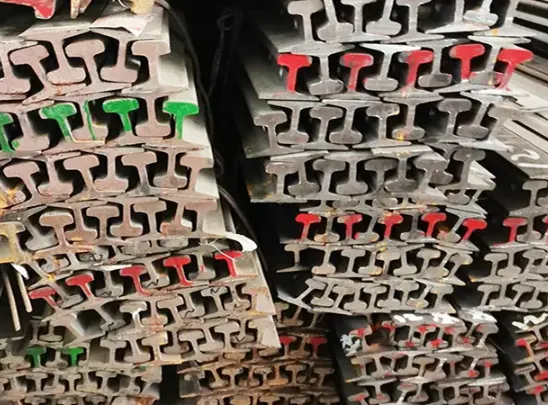
For standard stock lengths (such as 6-meter, 8-meter, or 10-meter sections), we maintain ready inventory to support rapid container loading with flexible ordering volumes.
- How are the S18 rail bundles packaged to ensure they maintain strict straightness metrics during long international ocean transport?
Every batch of S18 tracks undergoes automated multi-axis straightening before being tightly strapped into uniform structural bundles using heavy-duty steel bands. The bundles are fitted with specialized lifting eyes to prevent bending during crane handling at the port, and we place protective timber dunnage between layers inside the container to eliminate metal-on-metal sliding and preserve the track straightness all the way to your job site.
Get a Quote in 24 Hours
GNEE RAILWAY RAILWAYL balances premium steel refinement with automated rolling lines to supply certified S18 light rails, full series of European standards, and all matching connection hardware. Our milling facilities specialize in custom linear cutting and precise pre-drilled joint configurations executed to fit your exact engineering blueprints. Reach out to our technical sales office today to examine official material test reports, confirm length tolerances, and secure a transparent, direct-factory project quotation built to safeguard your infrastructure investment.


