

What is an ASCE rail?
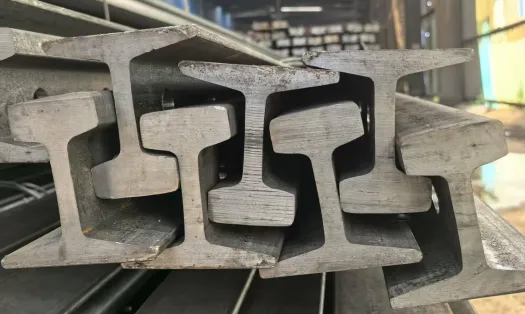
An ASCE rail is a light-to-medium-duty T-rail profile designed according to specifications from the American Society of Civil Engineers (ASCE). These rails are widely used in light railway, industrial, and crane applications, with common weights ranging from 25 to 85 pounds per yard. Their dimensions are standard, typically with a height equal to the base width.
ASCE Rail Specifications:
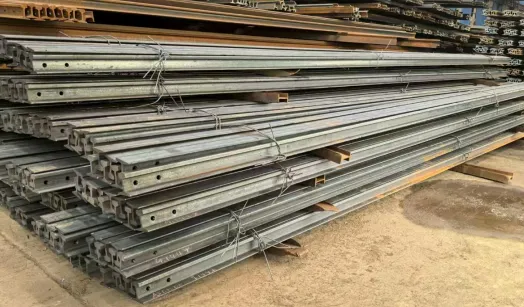
ASCE Rails are supplied by GNEE RAILWAY RAILWAYL in the following rail models, this info is provided in mm and kg, if you need other version in inch, send an message now for the other version.
| Size | Head (mm) | Height (mm) | Base (mm) | Web (mm) | Nominal weight (kg/m) | Material | Length (m) |
|---|---|---|---|---|---|---|---|
| ASCE 25 | 38.1 | 69.85 | 69.85 | 7.54 | 12.4 | 700 | 6-12 |
| ASCE 30 | 42.86 | 79.38 | 79.38 | 8.33 | 14.88 | 700 | 6-12 |
| ASCE 40 | 47.62 | 88.9 | 88.9 | 9.92 | 19.84 | 700 | 6-12 |
| ASCE 50 | 54 | 98.4 | 98.4 | 11.11 | 24.855 | 700 | 6-12 |
| ASCE 60 | 60.32 | 107.95 | 107.95 | 12.3 | 29.76 | 700 | 6-12 |
| ASCE 75 | 62.71 | 122.24 | 122.24 | 13.49 | 37.2 | 900A/1100 | 12-25 |
| ASCE 85 | 65.09 | 131.76 | 131.76 | 14.29 | 42.17 | 900A/1100 | 12-25 |
ASCE Rail Standards and Classification:
ASCE rails are defined by their weight per yard, a designation that has remained unchanged for over a century. The standard covers sections ranging from 12 lb to 100 lb per yard, with the number indicating the nominal weight. For industrial applications, the most common sections are ASCE 40, ASCE 60, and ASCE 85. Each section has unique asce 60 rail dimensions when compared to its lighter or heavier counterparts.
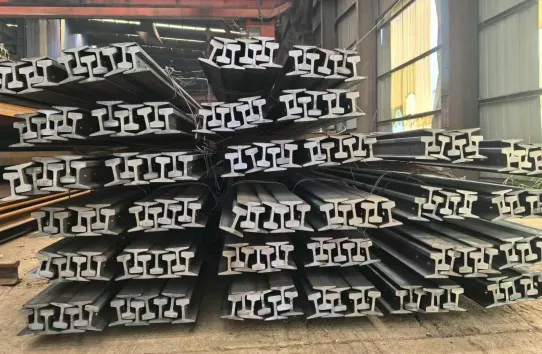
The asce 60 rail dimensions represent a square profile where the height equals the base width-a characteristic that simplifies mounting on flat surfaces. Heavier sections, such as ASCE 85, have a base width that exceeds the height, providing greater lateral stability for larger crane loads. Lighter sections, such as ASCE 40, are used for very light transfer cars or temporary tracks.
Steel Material Grades for ASCE Rail
ASCE rails (25–85 lb/yd) are typically manufactured from carbon steel grades corresponding to ASTM A1 standards, primarily 700-grade (for lighter rail) and 900A/1100-grade (for heavier rail). Common material specifications include Q235B, 55Q, and U71Mn for varied tensile strength, wear resistance, and hardness in industrial, crane, and light railway applications.
- ASTM A1 (Carbon Steel Rail): Applicable to light rail (including ASCE).
- ASTM A759 (High-Strength Rail Steel): Used in some export regions.
- National or enterprise standards (such as China's Q235B/Q275, 55Q, etc.)
| Q235B | Mechanical property | Chemical composition(%) | |||||||||
| Yield strength | Tensile strength | Elongation | Hardness | C | Si | Mn | S | P | |||
| MPa | kg/mm² | MPa | kg/mm² | min | HB | ≤ | ≤ | ≤ | |||
| ≥ | ≥ | ||||||||||
| 235 | 24 | 375-460 | 38-47 | 26% | 0.12-0.22 | 0.35 | 0.30-0.70 | 0.045 | 0.045 | ||
| 55Q | Mechanical property | Chemical composition(%) | |||||||||
| Yield strength | Tensile strength | Elongation | Hardness | C | Si | Mn | S | P | |||
| MPa | kg/mm² | MPa | kg/mm² | min | HBW | ≤ | ≤ | ||||
| ≥ | ≥ | ≥ | ≥ | ≥ | |||||||
| 685 | 69 | 197 | 0.50-0.60 | 0.15-0.35 | 0.60-0.90 | 0.04 | 0.04 | ||||
| Mechanical Property | Chemical Composition (%) | |||||||||||||
| U71Mn | Yield strength | Tensile strength | Elongation | Hardness | C | Si | Mn | S | P | Cr | Ni | Cu | ||
| MPa | kg/mm² | MPa | kg/mm² | min | HBW | |||||||||
| ≥390 | ≥40 | ≥880 | 9% | 0.65-0.76 | 0.15-0.35 | 1.10-1.40 | ≤0.030 | ≤0.030 | ≤0.250 | ≤0.250 | ≤0.250 | |||
ASCE 20–80 Steel Rails Classified by Application
ASCE 20–80 steel rails, defined by American Society of Civil Engineers (ASCE) standards, are tee rails classified by weight per yard (20 to 80 lbs/yd) and used primarily for light-duty railway, mining tracks, and industrial crane runways. They are categorized into light-weight (20–50 lb) for mining/construction, and heavier sections (60–80 lb) for cranes and industrial logistics.
ASCE Rail Classification by Application
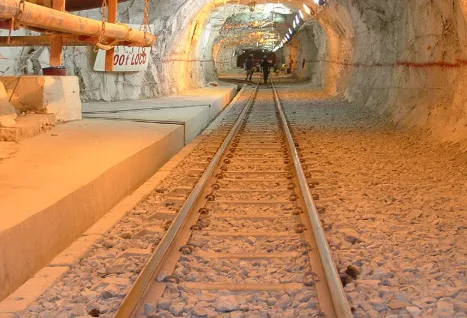
- Light Duty & Temporary Mining (ASCE 20–40): Commonly used for smaller industrial tracks, light overhead cranes, underground mining transport, and temporary construction railways.
- Medium Duty & Industrial (ASCE 50–60): Utilized for industrial mining tracks, material handling, and lighter crane runway applications.
- Heavy Duty Crane & Infrastructure (ASCE 75–80): Specifically designed for heavy-duty crane runways, port logistics, plants, and industrial spur tracks where higher rigidity and durability are required.
Frequently Asked Questions (FAQ)
1. What does ASCE stand for in rail terminology?
ASCE stands for the American Society of Civil Engineers, which originally standardized these rail sections. ASCE rails are defined by their weight in pounds per yard, such as asce 60 rail, which weighs 60 lb per yard.
2. How do ASCE rails differ from AREMA rails?
ASCE rails have a flat bottom and are designed for direct mounting on rigid surfaces like steel beams or concrete. AREMA rails are intended for ballasted mainline railway track and have a wider base with a more complex profile. The asce 60 rail dimensions are square (height equals base width), whereas AREMA sections typically have a base wider than the height.
3. What is the weight per meter of ASCE 60 rail?
The 60 lbs rail weight per meter is approximately 29.8 kg/m. GNEE RAILWAY RAILWAYL provides verified mill certificates confirming the 60 lbs rail weight per meter for every shipment.
GNEE RAILWAY RAILWAYL produces asce 60 rail and other ASCE sections with strict control of rolling precision and dimensional tolerance. With flexible production and processing capabilities, we help meet different project requirements. We can supply asce rail in multiple material grades, provide custom lengths, and offer surface treatments to match your operating environment.
If you need technical details or application support, you can contact us to get asce rail solutions. We will provide the right options based on your project conditions, from wheel load analysis to material selection and delivery scheduling.


