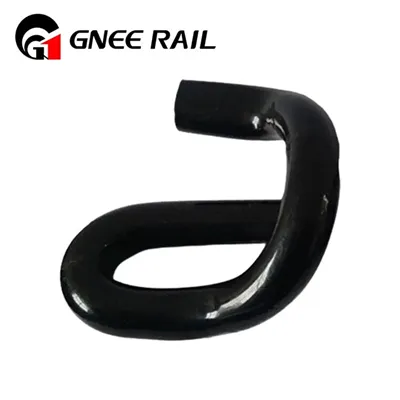
A rail pad is a flexible support component that transfers rail loads to the sleeper or baseplate evenly, absorbs vibrations and shocks, and protects track components from wear and deformation. Its material composition directly impacts track resilience and ride comfort. GNEE RAIL offers complete rail pad solutions including rubber, composite, fiber-reinforced, and polyurethane pads for GB, UIC50–UIC60, DIN536, QU rails, JIS, AS1085, BS11, and AREMA/ASCE standards, along with services for customized thickness, hardness, and installation support.
What is the full form of GRSP in railway?
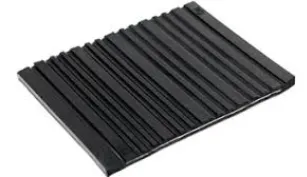
In the context of railway track components, GRSP stands for Grooved Rubber Sole Plate - a specialized type of rail pad placed between the rail foot and the sleeper to absorb vibration, reduce impact forces, provide electrical insulation, and improve grip for the rail fastening system.
What are the advantages of using Grooved Rubber Sole Plate?
Grooved Rubber Sole Plates (GRSP) offer significant advantages, primarily enhancing traction, stability, and durability in both footwear and railway applications. Key benefits include superior slip resistance, effective vibration damping, electrical insulation, and, in railways, reduced wear and tear on sleepers. These plates are durable, flexible, and often oil/water-resistant.
Key Advantages of Using Grooved Rubber Sole Plates

- Enhanced Traction & Stability: The grooved, or channeled, pattern increases friction, significantly reducing slip-and-fall risks in both industrial safety footwear and general applications.
- Vibration Absorption & Noise Reduction: In railway systems, GRSP are placed between the rail and sleeper to dampen noise, absorb shocks, and reduce dynamic load impacts.
- Durability and Wear Resistance: Made from durable, high-quality elastomeric rubber, they resist wear, tear, and weather, extending the lifespan of the equipment.
- Electrical Insulation: In railway track components, they act as an insulator to prevent electric current leakage between the rail and the sleeper.
What is the material of Grooved Rubber Sole Plates?
Grooved Rubber Sole Plates (GRSP) are primarily manufactured from high-quality natural rubber, or sometimes rubber compounds like SBR/PBR, specifically designed for high abrasion resistance and flexibility in rail fastening systems. These plates have a hardness of 75-85 Shore A and are used for shock absorption and electrical insulation between rail sleepers and rails.
Key Materials & Composition
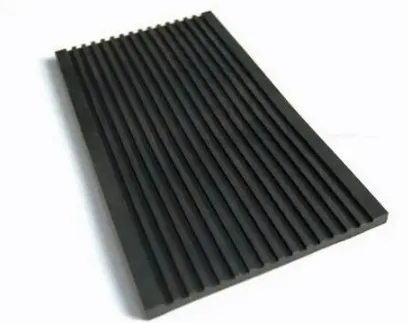
- Primary Material: Natural Rubber (often grades RSS 1-4).
- Elastomeric Blends: SBR (Styrene-Butadiene Rubber) or PBR (Polybutadiene Rubber) for specific properties.
- Reinforcement/Composition: Some designs feature composite layers, including polymer or metallic linings for increased tensile strength.
- Components: Compounded with carbon black for durability.
| Item Name | Railway Pad | ||
| Application | UIC54, UIC60, BS80lbs,BS100lbs, or as per sample/drawing requirement | ||
| Material | HDPE | EVA | Rubber |
| Technical | Density: 0.95-0.98g/cm3 | Density:0.95-0.98gcm3 | Hardness:75±5A |
| Parameter | Tensile strength: ≥19Mpa Elongation: >80% Melting point: 170-190°C Insulation resistance: ≥1×10¹⁰Ω Hardness:≥98A |
Tensile strength:≥15Mpa Elongation: >500% Melting point: 170-190°C Insulation resistance:≥1×10¹⁰Ω Hardness: ≥90A |
Hardness:75±5A Tensile strength: ≥12.5N/mm² Operating temperature:-25°C~100°C |
| Color | Dark Black | ||
Applications of rail pads in cranes
Crane rail pads, typically made of synthetic rubber or elastomer, are essential for "soft-mounting" crane rail systems by providing a flexible layer between the rail and its support structure. They are applied to reduce shock, noise, and vibrations. Key applications include distributing high wheel loads to prevent structural damage, reducing corrosion, and extending the life of both rails and foundations in ports, shipyards, and steel mills.
Key Applications and Functions of Crane Rail Pads:

- Load Distribution and Stress Reduction: Pads spread the concentrated load from the crane wheel over a larger surface area, reducing the stress on the rail foot and supporting steel girders or concrete foundations.
- Vibration and Noise Reduction: The elastic nature of the pads absorbs vibrations generated during crane operation, which reduces noise and prevents fatigue damage to the track foundation.
- Preventing Metal-to-Metal Corrosion: By eliminating direct contact between the steel rail and the supporting steel structure, pads reduce rust and abrasion, which is crucial for outdoor or harsh-environment installations.
- Accommodating Rail Movement: Pads allow for small amounts of movement and rotation, helping to maintain a proper, even load distribution.
As a professional rubber rail pad manufacturer GNEE RAIL can produce various standards of rubber rail pads and other rail fasteners. If you want to build a railway line, do not hesitate to contact us, we can supply all types of rubber rail pads with different materials. If necessary, we can make customized rubber rail pad production.
Click here to obtain the detailed product catalog of GNEE RAIL.